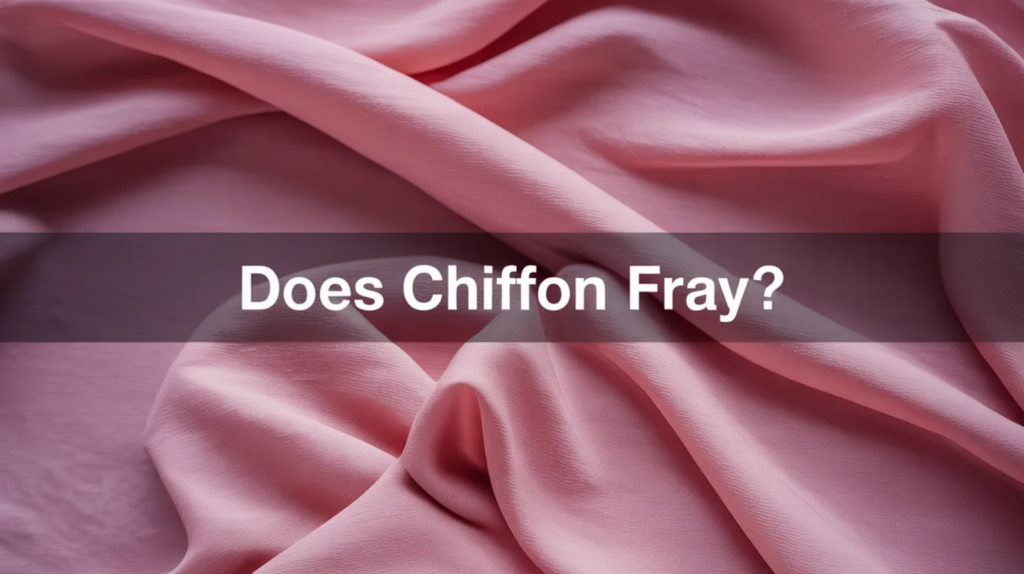
Chiffon is one of the fabrics people most often struggle with once the edge has been cut. So if you want the direct answer first: yes, chiffon can fray, and it can do so surprisingly fast.
The reason is not hard to see once you handle it. Chiffon is light, airy, and slightly unstable at the edge. It does not have the firm hold of a dense woven fabric, so a raw cut line can begin loosening long before the whole item looks damaged. That is also why chiffon belongs among fabrics that tend to fray more easily than sturdier everyday materials, especially when the cloth is thin and flowing.
What makes chiffon so vulnerable?
Weight is a big part of it. Chiffon is usually made to feel soft, light, and mobile rather than compact and structured. That beautiful drape comes at a cost: the threads near the edge do not always stay locked in place once the original finish is removed.
Instead of holding a sharp, dependable cut edge, chiffon may begin releasing tiny threads, shifting slightly out of line, or developing a feathery border. On very sheer versions, this can start almost immediately after cutting if the fabric is moved around too much.
Fraying on chiffon does not always look dramatic at first
That is one reason people sometimes miss it. The early stage can look minor, almost harmless. A few fine threads appear, the edge loses its clean line, and the fabric starts looking less crisp. But because chiffon is so light, a small amount of edge damage can spread more quickly than it would on a heavier cloth.
Over time, the border may become uneven, thinner, or slightly shortened in places where the weave has already started to give way.
Why chiffon frustrates people during sewing and repairs
Chiffon is not only fray-prone in wear. It can also become difficult while being handled. Pinning, repositioning, seam ripping, trimming, or even repeated lifting from the table may disturb the cut edge. So the problem often begins before the garment or fabric item is even finished.
This is especially true when someone delays edge control. A fabric like denim may forgive that delay for a while. Chiffon usually does not.
Are all chiffon fabrics equally fray-prone?
No. Polyester chiffon, silk chiffon, and blended chiffon can behave a little differently. Some are slightly crisper and more manageable, while others are so fluid that the cut edge starts shifting almost immediately. The weave density also matters. A tighter chiffon may hold longer than an ultra-sheer version designed mainly for softness and movement.
Still, even the more manageable types are not usually fabrics you would call edge-stable. Chiffon generally needs planning from the moment it is cut.
Common places where chiffon starts fraying
Hems are the obvious example, but not the only one. Necklines, sleeves, scarf ends, layered panels, seam allowances, and decorative overlays can all start fraying if the edge is left exposed or stressed. On garments, the movement of the body adds more strain, especially where the fabric rubs or swings repeatedly.
On occasion, the damage appears inside first, where the seam allowance has started loosening, while the outer part still looks acceptable from a distance.
How chiffon compares with satin
Chiffon and satin both create edge problems, but not always in exactly the same way. Satin tends to be smooth and slippery, while chiffon is usually airy and open-feeling. So although both can fray, chiffon often feels less controlled from the start. Someone who has already dealt with the shifting, delicate edges that happen with satin will usually recognise the same need for early edge handling here, but chiffon often feels even less forgiving because of how light it is.
Can chiffon fraying be prevented?
Usually, yes, but prevention matters more than rescue. Chiffon gives the best results when the edge is managed early and gently. Clean cutting helps. Minimal handling helps. Finishing the edge before it has time to loosen too far helps most of all.
Once the edge has already started breaking down, the fabric becomes harder to control neatly because there is so little structure to work with. That is why chiffon rewards careful preparation more than rough correction afterward.
Can frayed chiffon be repaired?
Sometimes, but it depends on how far the damage has gone. If only a narrow edge has started loosening, there is often still enough fabric to stabilise it. If the fraying has moved inward or affected a visible part of the garment, the repair can be much harder to disguise cleanly.
With chiffon, the challenge is not only stopping further fraying but also preserving the light look of the fabric. Heavy-handed fixes often solve one problem while creating another.
Is chiffon a bad fabric because it frays?
Not at all. Chiffon is chosen for its drape, softness, and delicate appearance, not for rugged durability. The fact that it frays more easily is really the trade-off for the look and feel people want from it.
So fraying is not a sign that chiffon is defective by default. It is more a sign that the fabric needs handling that matches its nature.
So, does chiffon fray?
Yes. Chiffon frays easily enough that raw edges should usually be treated as temporary, not permanent. Its lightweight structure, soft movement, and delicate weave make it one of the more edge-sensitive fabrics to cut, sew, and wear. Some versions behave a little better than others, but chiffon is rarely a fabric that stays neat for long when left unfinished.
If you treat the edge early and carefully, chiffon can still work beautifully. If you leave it exposed and keep handling it, the fraying tends to catch up fast.