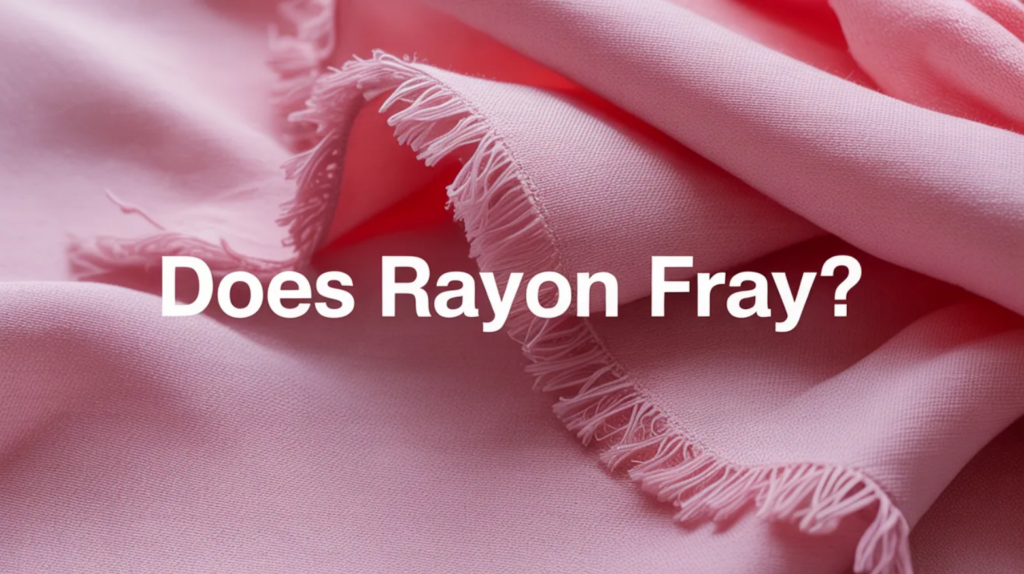
Rayon can fray quite easily, especially when the fabric is lightweight, loosely woven, or cut without any edge finishing. It often looks smooth and soft on the surface, which can make it seem gentle and stable, but the cut edges are usually much less forgiving. Once those edges start opening up, loose threads can appear faster than many people expect.
That is one reason rayon deserves its own place among fabric types that fray differently depending on fibre structure and weave. It may drape beautifully, but that softness can also mean less resistance at seams, hems, corners, and freshly cut edges.
Why rayon frays so often
The main issue with rayon is that it tends to have a softer, more delicate construction than tougher synthetic fabrics. When the edge is cut, the threads can start slipping free more easily, particularly if the fabric is thin or has a fluid drape. Fraying becomes even more noticeable when the material is handled a lot during sewing, washed repeatedly, or pulled at stress points.
In practical terms, rayon often does not need extreme damage to start fraying. A raw edge, a bit of rubbing, or repeated movement near a seam may be enough to create visible thread loss. This is why people working with rayon for dresses, blouses, linings, and soft home fabrics often notice edge wear sooner than they expected.
Does all rayon behave the same way?
No. Rayon is a broad category, and some versions are more stable than others. A tightly woven rayon fabric may hold together better than a very airy or slippery one. A heavier blend may also behave differently from a soft, lightweight viscose-style rayon used for flowing garments.
So when someone asks whether rayon frays, the honest answer is yes, but the speed and severity depend on the specific fabric. Weight, weave density, finish, and intended use all affect how quickly the edges begin to unravel.
Where fraying usually starts on rayon
Rayon most often begins fraying at raw edges, seam allowances, hems, sleeve ends, and cut panels that have not yet been secured. It can also start around stress points where the fabric bends or pulls again and again. If the fabric is used in clothing, friction from wearing and washing can push those weak points further.
Unlike some tougher materials that resist early edge damage, rayon may start showing a messy edge quite soon after cutting. The fraying can look light at first, but over time the edge may lose shape, become uneven, or shrink back further into the fabric.
What rayon fraying looks like
Rayon fraying usually appears as fine loose threads escaping from the cut edge. On some fabrics, the edge starts looking feathery or slightly shredded rather than staying neat and flat. On others, the weave begins opening line by line, which can make the edge creep inward over time.
Because rayon often has a soft, fluid appearance, fraying can also make the whole piece look more tired than it really is. A small amount of edge damage may stand out quickly, especially on garments where drape and clean finishing matter.
Is rayon more likely to fray than nylon?
In many cases, yes. Rayon is usually more fray-prone than nylon because it does not have the same synthetic filament toughness at the edge. While nylon can still wear down and unravel, rayon often starts opening up sooner after cutting or repeated handling.
That does not mean every rayon fabric is weak, but it does mean it usually needs more care during cutting, sewing, and washing. People often run into trouble when they treat rayon like a sturdier everyday fabric and leave raw edges exposed for too long.
Rayon compared with other delicate fabrics
Rayon is not the only fabric that can start loosening quickly at the edges. It often behaves more like softer, more delicate materials than like hard-wearing synthetics. In that sense, it has something in common with silk, which can also show edge damage early when the fabric is fine, smooth, or under stress. Both can look elegant on the surface while still needing careful handling underneath.
This is useful because it reminds you not to judge fray risk by appearance alone. A fabric that feels soft and premium is not always the one that tolerates rough cutting or repeated abrasion.
Can rayon fraying be prevented?
Usually, yes. Rayon responds best when the edge is secured early rather than after the unraveling becomes obvious. If the fabric is cut and then left unfinished for too long, the threads may keep loosening while the piece is being moved, pinned, tried on, or washed.
Prevention often comes down to reducing stress on the raw edge. Clean cutting, careful handling, and timely finishing methods make a big difference. Once the edge is controlled, rayon is much easier to manage and much less likely to keep deteriorating.
What makes rayon fray faster?
A few conditions tend to speed the problem up. Lightweight construction is one. Frequent washing is another, especially if the fabric rubs heavily against other items. Poor-quality cutting can also contribute, particularly when the edge is stretched, snagged, or left rough from the start.
Seam strain is another common cause. If the fabric is tight across the body, pulled at a corner, or stressed at a fastening point, the weave may begin separating near the stitching. Once that happens, the area can move from minor fraying to visible weakness quite quickly.
Can frayed rayon be repaired?
Sometimes, but the result depends on how much material has already been lost. If the damage is still near the edge, there is often a fair chance of stabilising it before the fraying spreads further. If the fabric has thinned badly or pulled apart near a high-stress seam, the repair may be more about containing the damage than fully restoring the original finish.
That is why early attention matters so much with rayon. A small amount of thread loss is much easier to manage than a section that has already started collapsing inward.
Should rayon always be finished after cutting?
In most cases, that is the safer approach. Rayon is one of those fabrics where delayed finishing can create unnecessary problems. Even if the edge looks fine at first, handling alone may start loosening the threads before the final construction is complete.
This does not mean rayon is unusable or difficult in every case. It simply means that it benefits from a more careful workflow. The smoother and lighter the fabric, the more that becomes true.
So, does rayon fray?
Yes, rayon does fray, and often more readily than sturdier fabrics. Its soft structure, flowing drape, and sometimes delicate weave make raw edges more vulnerable to thread loss, especially after cutting, washing, or repeated strain. Some rayon fabrics are more stable than others, but in general it is a material that should be handled with edge protection in mind.
If you catch the issue early, rayon can still be managed well. But if the edge is ignored for too long, the fraying may spread faster than it would on many tougher fabrics.