Wool is a natural fiber produced by animal hair, valued for warmth, elasticity, and resilience.
Unlike many other fabrics, wool fibers are naturally crimped and spring-like, which allows them to stretch, compress, and recover without breaking. This built-in elasticity gives wool a powerful advantage against fraying, but it does not make wool immune to damage.
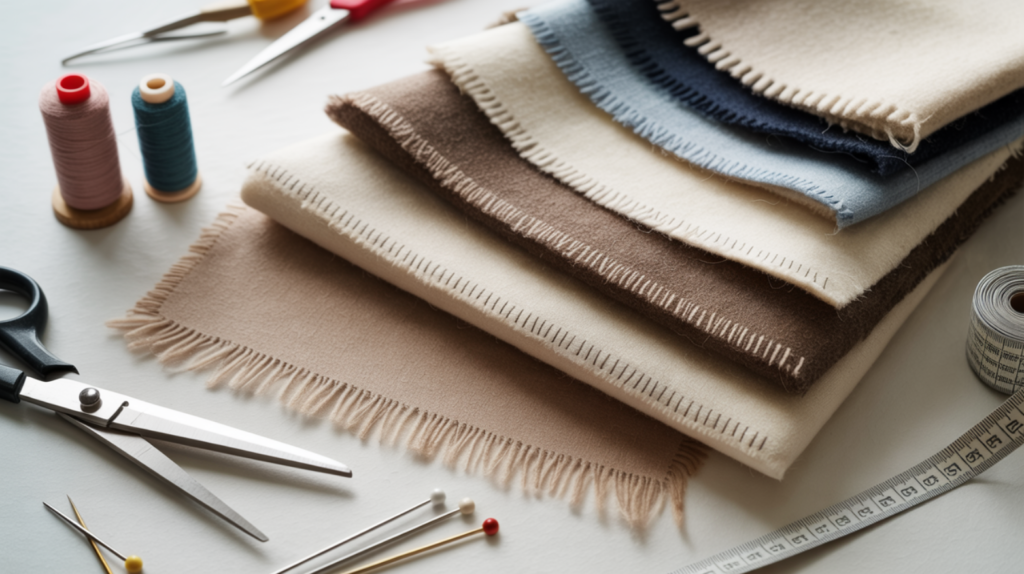
Understanding how wool behaves under stress reveals why it resists fraying, and how to keep it that way.
Why Wool Resists Fraying Better Than Most Fabrics
Each wool fiber contains a complex internal structure that allows it to bend repeatedly without snapping.
When pressure is applied, the fibers stretch and then return to their original shape, absorbing motion that would otherwise break rigid fibers like those found in linen.
This elastic behavior is the opposite of what happens in linen fabric fraying explained, where stiff plant fibers crack under repeated bending. Wool’s flexibility distributes stress across many fibers instead of concentrating it in one area, which dramatically slows the development of frayed edges.
However, this protection only works while the fibers remain healthy and intact.
What Actually Causes Wool to Fray
Wool fraying usually begins when the fiber structure becomes damaged by external factors:
- Excessive heat dries and weakens fibers
- Harsh detergents strip protective oils
- Aggressive agitation causes fiber breakage
- Prolonged abrasion thins the surface structure
Once fibers lose their elasticity, they can no longer redistribute stress effectively. At that point, breakage begins, and fraying develops along seams, cuffs, and high-contact areas.
This breakdown pattern is very different from what occurs in delicate fabrics like silk, where even mild friction causes damage, as seen in silk fabric fraying causes & prevention.
How to Stop Wool Fraying Before It Starts
Preserving wool’s natural elasticity is the key to preventing fraying.
The most effective solutions include:
- Washing with cool water to protect fiber structure
- Using gentle wool-safe cleansers
- Avoiding heat during drying
- Minimizing friction from heavy bags, belts, and tight garments
- Storing wool items folded instead of hanging to prevent fiber stretch
These steps protect the internal structure that makes wool so resistant to damage.
When cared for properly, wool garments can remain structurally sound for decades, which is why wool occupies a unique position within the broader framework of fabric fraying by material type.
How Wool Fraying Compares With Synthetic Fabrics
Wool fibers behave very differently from man-made fibers.
While wool stretches and recovers, many synthetic fibers remain rigid and instead slip at the weave level. This is why, under certain conditions, polyester can fray even though its fibers themselves remain strong.
Understanding these contrasts helps explain why fabric selection alone plays such a major role in long-term durability.
Final Clarity
Wool fraying is not caused by weakness, it is caused by the loss of elasticity that normally protects the fiber structure.
When that elasticity is preserved, wool resists fraying better than most fabrics.
Healthy fibers create long-lasting fabric.