Repair is powerful, but it is not always the right answer.
There comes a moment when fabric reaches the end of its workable life, not because of a single tear or frayed edge, but because the material itself has quietly lost its strength.
Knowing when to stop repairing and start replacing is a form of wisdom that saves time, effort, and disappointment.
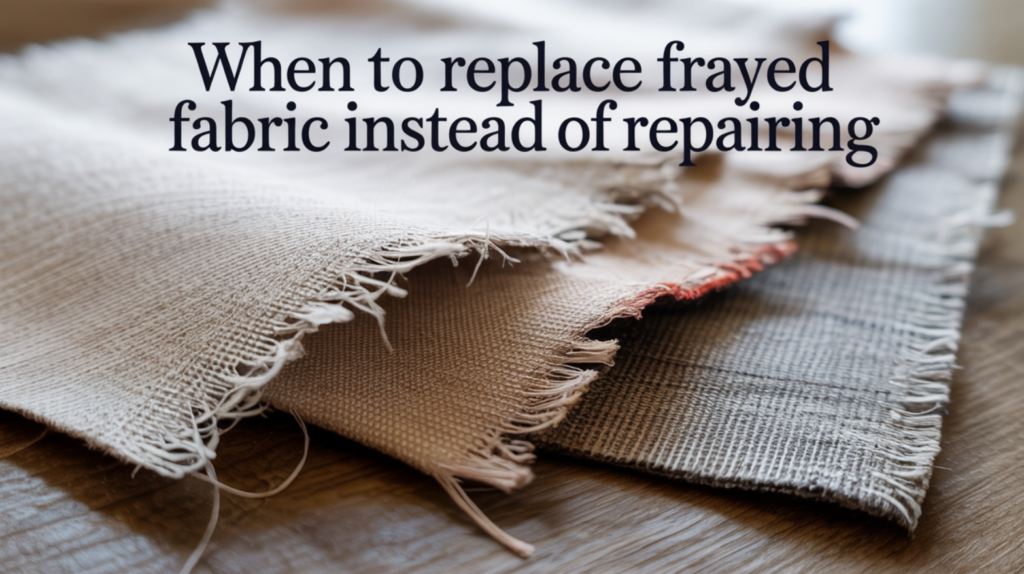
Replacing frayed fabric is not giving up.
It is recognizing that the structure has already changed.
The Quiet Signs That Fabric Has Passed Its Repair Window
Fabric does not fail suddenly.
It weakens over months and years through stress, washing, sunlight, and movement.
Replacement becomes the better option when you notice:
- Widespread thinning across the surface
- Multiple fraying points appearing at once
- The weave looking loose or transparent
- Repaired areas reopening repeatedly
- The fabric feeling fragile when handled
These signs indicate that the fibers no longer support each other effectively.
Any new repair is simply attaching strength to weakness.
Why Some Fabrics Cannot Be Saved
Repair depends on surrounding fibers to carry stress.
When those fibers have already degraded, reinforcement has nothing stable to anchor into.
This is why even beautifully executed repairs on very old upholstery or heavily worn garments sometimes fail within weeks. The material has already crossed its structural limit.
Temporary stabilization may still help for short use, but permanent restoration becomes unrealistic, a distinction explored in Temporary vs Permanent Fabric Fraying Fixes.
The Emotional Challenge of Letting Go
People do not struggle with replacement because of money alone.
They struggle because of memory.
A jacket that traveled with you.
A couch that held a thousand conversations.
A blanket that watched children grow.
Letting go of worn fabric feels like letting go of time.
But replacement does not erase those moments.
It simply allows the next chapter to begin without the constant frustration of things falling apart.
How to Make the Decision with Clarity
Choose replacement when:
- Repairs no longer last
- New damage appears faster than old damage is fixed
- The fabric feels weak even before it frays
- The cost of repeated repair exceeds replacement
Choose repair when:
- Damage is localized
- The surrounding fabric remains strong
- The item holds meaningful value
- The structure still responds well to reinforcement
Earlier repairs like those in Repairing Frayed Clothes at Home and How to Repair Frayed Upholstery Fabric help extend this decision point, but they cannot eliminate it forever.
What Replacement Really Means
Replacing frayed fabric is the decision to retire material that has lost its structural integrity and can no longer support reliable repair.
It protects you from ongoing failure and creates space for durable, dependable function moving forward.
Knowing when to replace is not defeat.
It is responsible care.