Fabric fraying is one of the most common signs of fabric aging, yet many people do not fully understand what it means or why it happens.
This article explains fabric fraying in clear, simple terms, showing how it begins, how it develops, and why recognizing it early makes such a meaningful difference for the life of your clothing and textiles.
Understanding Fabric Fraying in Simple Terms
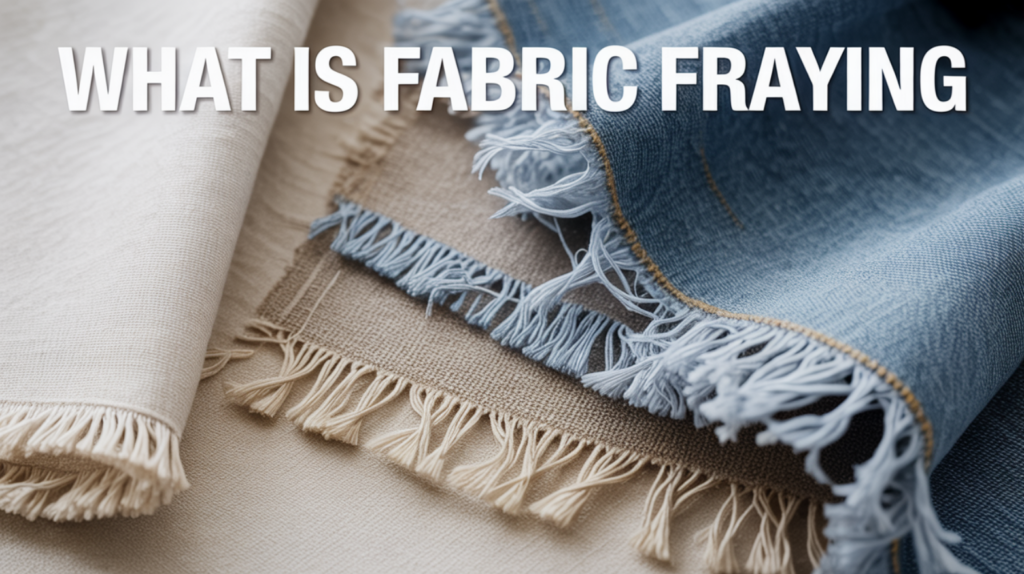
Fabric fraying is the gradual separation and loosening of threads from the main structure of a textile.
This happens when the fabric’s interwoven fibers lose their ability to hold together under daily stress and movement.
In real life, people first notice fraying around hems, seams, cuffs, collars, and pocket edges.
What begins as a few loose threads slowly becomes visible damage that spreads deeper into the fabric.
Fabric fraying is a physical breakdown of textile fibers caused by mechanical stress over time.
It is not a surface issue, a stain, or a cosmetic flaw, it is the fabric itself losing structural cohesion.
How Stable Fabric Becomes Frayed
All fabric is created by locking fibers together under tension.
That tension keeps the cloth smooth, flexible, and strong.
With regular wear, washing, folding, and friction, that tension weakens.
As the fiber bonds loosen, individual threads begin slipping free.
Once this process starts, the fabric edge becomes unstable and more fibers follow.
This slow breakdown explains why fraying tends to grow wider instead of staying in one small spot, a concept explored more deeply in why fabric frays over time.
Where Fraying Usually Appears First
Fraying shows up fastest in areas that experience the most movement and contact.
Trouser hems rub against shoes.
Sleeve cuffs brush against surfaces.
Collars bend repeatedly.
Pockets carry weight.
Because these zones carry the highest stress, they are where fraying begins.
How Fraying Differs From Other Fabric Damage
Fabric fraying is not tearing, fading, shrinking, or staining.
Tears come from sudden force.
Fading results from light exposure.
Stains occur through chemical contact.
Fraying develops when fibers slowly separate from repeated mechanical strain.
Understanding this difference matters, because fraying requires reinforcement rather than cleaning or cosmetic treatment.
If you want to understand the exact mechanical triggers at work, what causes fabric edges to fray explains the process at the fiber level.
Why Fraying Continues Once It Starts
Once fibers loosen, the fabric loses its balance.
That imbalance allows surrounding threads to escape more easily, accelerating the damage.
Without intervention, fraying slowly travels inward toward seams and load-bearing areas.
This is why noticing early fraying and acting quickly can dramatically extend the life of clothing, upholstery, and household textiles.
There is something deeply satisfying about protecting a favorite garment before the damage becomes permanent, a quiet victory over wear and time.
Conclusion
Fabric fraying is the gradual unraveling of textile fibers from their original weave caused by ongoing physical stress.
It is a natural process, but one that can be slowed, managed, and often prevented with timely care and reinforcement.