Fabric edges are the first place where wear becomes visible.
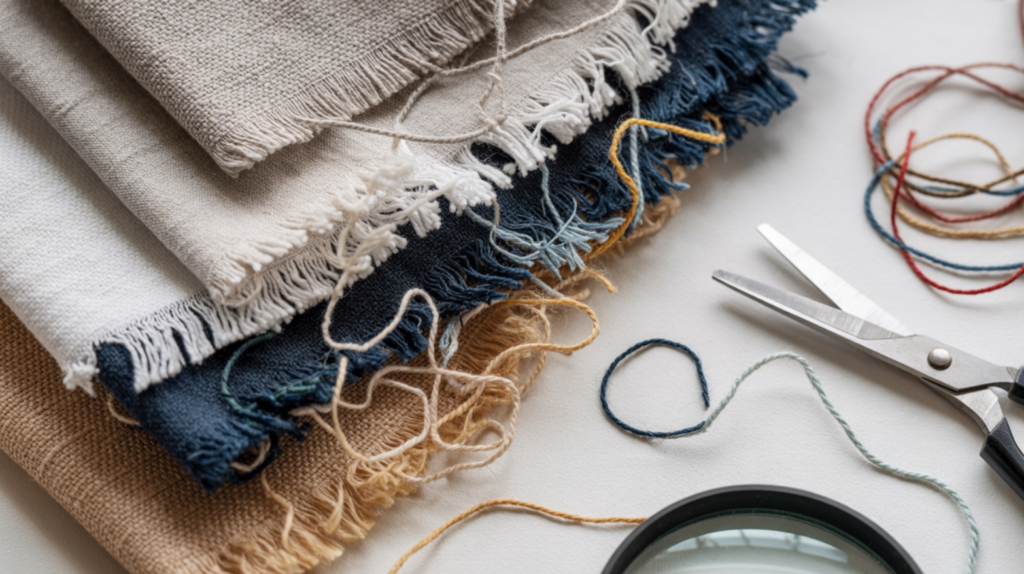
This article focuses on why edges break down faster than the rest of the fabric, how everyday actions contribute to this damage, and what those early signs reveal about the health of a textile.
Why Fabric Edges Break Down First
Fabric edges fray because they are the most exposed and vulnerable part of any textile.
Unlike the center of the fabric, edges lack surrounding fibers to hold them firmly in place.
This makes them the first area where tension fails and threads begin to escape.
In simple terms, when stress meets an unprotected edge, the fabric starts coming apart.
Fabric fraying itself is the gradual breakdown of fiber structure caused by repeated physical stress, and edges are where this process becomes visible first.
How Movement and Friction Trigger Fraying
Everyday motion bends and rubs fabric against surfaces.
Walking causes trouser hems to brush against shoes.
Arms swing and cuffs scrape tables, doors, and skin.
Washing machines twist and compress fibers under pressure.
These actions create friction.
Friction weakens fiber bonds.
Once the bonds weaken, individual threads begin slipping free.
This chain reaction explains why fraying is discussed so often in what is fabric fraying, where early fiber separation leads to visible unraveling.
Why Cutting Fabric Creates Fray Risk
When fabric is cut, the protective weave is broken.
The newly exposed edge loses the internal support that once held fibers together.
Without reinforcement, normal handling allows threads to escape easily.
That is why unfinished hems, raw seams, and trimmed edges fray quickly, especially on garments that experience frequent movement.
This natural progression of breakdown is also connected to the long-term aging described in why fabric frays over time.
How Washing Intensifies Edge Damage
Water loosens fibers.
Detergents reduce friction control.
Agitation bends threads in multiple directions at once.
Together, these forces place heavy strain on exposed edges.
Over time, the weave cannot recover its original tension, and fraying accelerates.
This is why reinforced seams last longer and raw edges deteriorate quickly.
Why Some Edges Fray Faster Than Others
Edges that experience constant bending, weight, and abrasion deteriorate faster.
Hems dragging against the ground.
Sleeves rubbing against desks.
Pocket openings bearing the weight of keys and phones.
The pattern of stress determines the speed of fraying.
The Quiet Consequence of Ignoring Fraying
Unprotected edges continue weakening until the fabric can no longer hold its shape.
What begins as a few loose threads slowly becomes structural damage.
There is a quiet satisfaction in stopping this process early, in protecting the life of a garment before time claims it.
Closing Perspective
Fabric edges fray because they lack the internal support that protects the rest of the textile.
This makes them the first place where tension fails and fibers escape.
Although fraying is natural, understanding its causes gives you real power to slow the process and preserve the things you use every day.