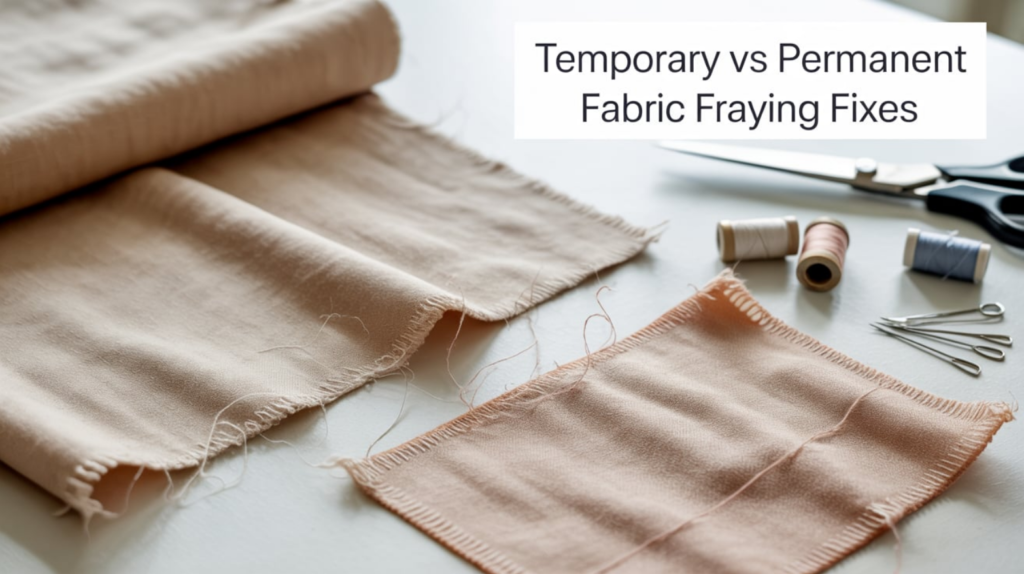
Not every fabric repair needs to last forever.
Some fixes exist to stabilize damage for a short period, while others are designed to restore long-term strength.
Understanding the difference between temporary and permanent fraying fixes prevents wasted effort and helps you choose the right solution for each situation.
At its core, fabric repair always begins with the same goal:
stop the unraveling and stabilize the fibers.
What happens next determines whether the solution will endure.
What Temporary Fixes Really Do
Temporary fixes are about immediate control.
They stop fibers from continuing to separate and hold the fabric together long enough to preserve function or appearance.
Common temporary methods include:
- Fabric tape
- Quick-dry glue
- Clear nail polish
- Iron-on patches
- Safety pin reinforcement
These methods work well for emergencies, short-term wear, travel situations, or costumes.
However, they do not rebuild the internal strength of the fabric.
They simply hold the damage in place.
This approach is often enough for light garments or short use, but it becomes insufficient under repeated stress, especially in high-load areas such as denim and upholstery.
What Permanent Fixes Actually Restore
Permanent fixes aim to rebuild structure.
They involve stabilizing the weakened fibers and reinforcing the surrounding fabric so stress is redistributed away from the damaged zone.
Permanent repair techniques include:
- Stitch reinforcement
- Backing patches
- Seam reconstruction
- Edge binding
- Upholstery re-support stitching
These methods restore load-bearing capacity and significantly extend the usable life of the fabric.
Permanent solutions are essential for garments that experience frequent movement, such as jeans and everyday clothing, which is why methods discussed in Can You Repair Frayed Denim and Repairing Frayed Clothes at Home rely on structural reinforcement rather than surface-level stabilization.
Choosing the Right Fix for the Situation
Temporary fixes are best when:
- The fabric will only be used briefly
- The item is cosmetic or decorative
- A full repair is not immediately possible
Permanent fixes are best when:
- The fabric supports weight or movement
- The damage appears in stress zones
- Long-term durability matters
In many cases, a temporary fix is used first to halt further damage until a permanent repair can be done properly.
The Emotional Cost of the Wrong Choice
There is a special kind of frustration that comes from fixing something twice.
Choosing the wrong repair method often leads to repeated damage, wasted time, and disappointment.
Understanding the purpose of each fix brings peace of mind and better results.
What Temporary and Permanent Fixes Truly Are
Temporary fabric fraying fixes are short-term stabilization methods that hold fibers in place without restoring structural strength.
Permanent fabric fraying fixes are reinforcement methods that rebuild weakened areas and redistribute stress for long-term durability.
Knowing the difference allows you to protect your fabric properly and extend its life with confidence.