Silk is a protein-based natural fiber produced by silkworms, prized for its smooth surface, soft shine, and lightweight structure.
Despite its beauty, silk is one of the most fragile fabrics when it comes to fraying. The very qualities that make silk feel luxurious, fine threads, smooth texture, and low density, also make it extremely sensitive to friction, moisture, and handling.
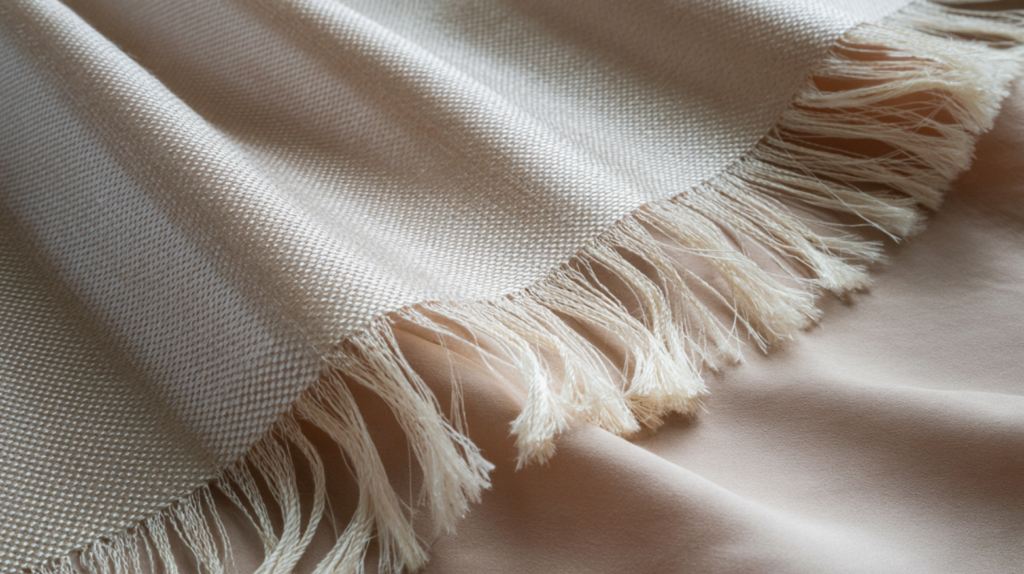
This delicate balance is why silk garments often show fraying long before they appear worn.
Why Silk Frays So Easily
Silk fibers are long, thin filaments with very little internal bulk.
Because the threads are so fine, even minor abrasion causes surface fibers to loosen and break. When those fibers break, the surrounding threads lose support, allowing the weave to open and the fabric edges to unravel.
Unlike dense fabrics such as denim, which resist damage until stress becomes extreme, silk begins deteriorating under relatively gentle contact, a contrast that becomes obvious when comparing this behavior with denim fabric fraying issues.
Humidity and perspiration accelerate silk damage. Moisture weakens protein bonds inside the fibers, making them more vulnerable to mechanical stress. Over time, everyday movement becomes enough to initiate fraying.
Where Silk Fraying Appears First
Silk fraying typically develops in locations exposed to repeated contact:
- Sleeve edges brushing against skin
- Collar areas rubbing against the neck
- Underarm zones exposed to moisture and friction
- Seams that carry garment weight
Because silk fibers are extremely fine, once damage begins it spreads quickly. A single frayed edge can compromise the entire structure of a seam if left untreated.
This sensitivity explains why silk garments often require specialized care compared to sturdier natural fabrics such as cotton, where the fraying pattern behaves very differently, as detailed in cotton fabric fraying problems.
How Silk Fraying Progresses Over Time
As silk fibers break, the surrounding weave loses cohesion.
Each movement pulls on fewer intact fibers, increasing strain on the remaining threads. This creates a cascading effect: more breakage leads to more stress, which leads to faster fraying.
Once silk begins unraveling, the process rarely stabilizes without intervention. Preventive care becomes essential long before visible damage appears.
This behavior fits directly into the broader framework of fabric fraying by material type, where fiber composition dictates the lifespan of the fabric.
Preventing Fraying in Silk Fabrics
Although silk is fragile, careful handling dramatically extends its life.
The most effective prevention methods include:
- Reducing friction by avoiding tight accessories and rough surfaces
- Limiting moisture exposure from sweat and humidity
- Hand washing with gentle cleansers
- Air drying without heat
- Storing garments flat or lightly folded to prevent stress points
These practices protect the internal fiber structure, allowing silk to maintain both strength and appearance far longer.
Final Clarity
Silk fraying happens because ultra-fine protein fibers weaken quickly under friction and moisture.
Once those fibers break, the weave opens and the fabric unravels with little resistance.
Silk is exquisite, but it survives only through careful treatment.