Frayed fabric is not just a cosmetic problem, it is a structural issue where the woven threads of a material loosen, break, and continue unraveling if left untreated.
Repairing frayed fabric means stopping thread loss, stabilizing the edge, and restoring usable strength to the material so the damage does not spread.
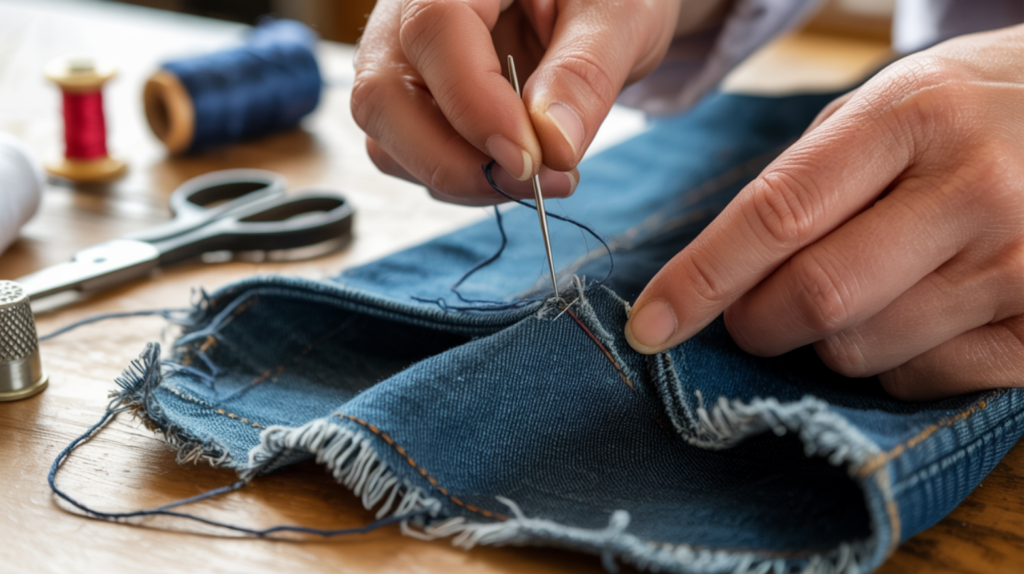
When fabric begins to fail, it often starts quietly. A loose thread on a cuff. A fuzzy seam on a pillow. A thinning patch on denim. That small moment of wear is the opening signal that repair is needed.
This guide explains how frayed fabric is repaired, why certain methods work, and when repair is truly worth doing.
Why Frayed Fabric Must Be Repaired Early
Fabric fibers interlock to create strength.
When the interlocking weakens, the cloth loses tension and stability.
As a result, the fray expands.
The longer this process continues, the more material is lost, and the more difficult it becomes to restore the fabric.
Early repair does three critical things:
- It stops the unraveling process
- It preserves the surrounding fibers
- It extends the usable life of the item
This is especially important when working with garments, upholstery, and home textiles where repeated movement accelerates damage.
If you are still learning the causes behind this breakdown, the foundation is explained in What Is Fabric Fraying, which clarifies how different fibers behave under stress.
How Fabric Repair Actually Works
Repairing frayed fabric is not about making it look new.
It is about rebuilding stability.
All effective fabric repairs follow the same principle:
- Secure the loose fibers
- Reinforce the weakened area
- Prevent further thread separation
Whether the repair is done by hand, machine, adhesive, or sealant, each method serves this same structural goal.
Different materials behave differently during repair. For example, when it comes to different kinds of fabrics, polyester can fray less aggressively than cotton, but once damaged it often requires stronger stabilization because its fibers do not naturally re-tighten.
Types of Fabric Repair Situations
Repair is not one-size-fits-all.
The approach depends on where and how the fabric is fraying.
Common situations include:
- Clothing edges and hems that weaken from washing and friction
- Upholstery seams that loosen from body weight and movement
- Denim stress points that fray from bending and abrasion
- Temporary damage that needs fast stabilization
- Permanent repairs meant to restore long-term usability
Each of these scenarios requires a tailored solution, which is why this pillar connects to specialized guides such as:
We will explore those in detail through the supporting articles.
When Repair Is Worth Doing
Repair is worthwhile when:
- The fabric still has structural integrity
- The damage is localized
- The item has functional or emotional value
Repair is less effective when the fabric itself has thinned across large areas or the weave has lost cohesion throughout the piece. In such cases, replacing the material often becomes the safer and more durable option, which is discussed fully in When to Replace Frayed Fabric Instead of Repairing.
Understanding this balance prevents wasted effort and ensures long-term results.
The Emotional Value of Repair
There is something quietly satisfying about repairing fabric.
A favorite jacket. A childhood blanket. A couch that holds years of family memories.
Repair restores not just function, but connection.
It extends the story of an object instead of ending it.
That emotional dimension matters, because people do not repair fabric merely to save money, they repair it to preserve meaning.
What Repairing Frayed Fabric Truly Is
Repairing frayed fabric is the process of stabilizing weakened textile fibers to stop unraveling and restore usable strength.
It is a controlled intervention that prevents further material loss and extends the functional life of the fabric.
When performed correctly and at the right time, fabric repair protects both the material and the value of the item.