Clothing doesn’t fail all at once.
It weakens quietly, at cuffs, seams, pockets, and hems, until one day a favorite shirt or pair of jeans begins to unravel.
Repairing frayed clothes at home means intervening early, stabilizing the damage, and restoring the garment’s usable life without needing professional tailoring.
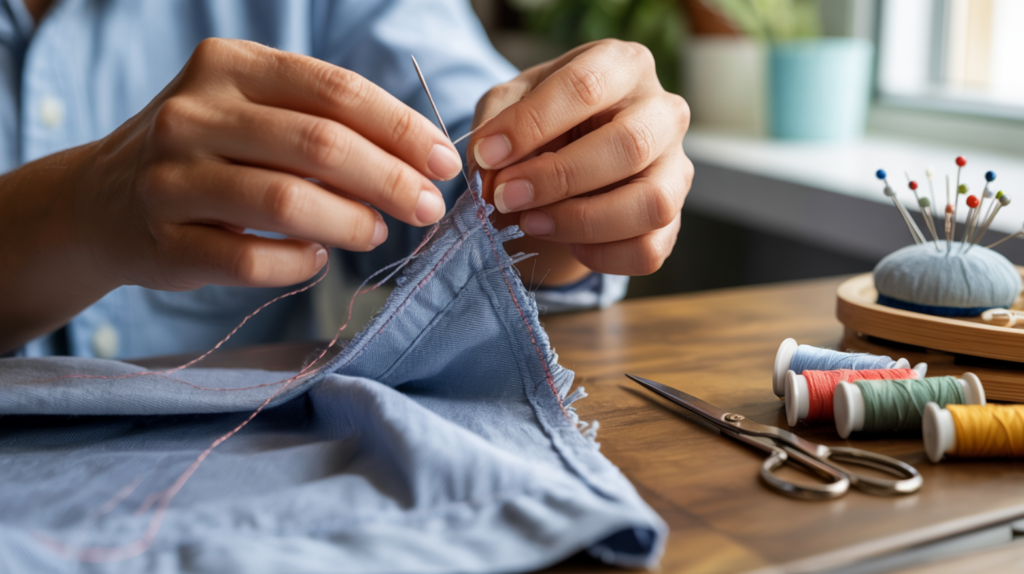
This kind of repair is less about perfection and more about preservation.
Where Clothing Frays Most Often
Clothes move with the body.
That movement places constant stress on specific zones:
- Sleeve cuffs
- Pant hems
- Collar edges
- Pocket openings
- Inner thigh seams
- Underarm stitching
As the fibers in these zones stretch and compress repeatedly, they lose cohesion.
Threads loosen, the weave opens, and fraying begins.
When these areas are ignored, the damage migrates outward, turning small edge failures into structural problems. That early stage is exactly where repairs are most effective, especially along boundaries like hems and seams that were previously stabilized in How to Fix Frayed Fabric Edges.
A Calm, Practical Home Repair Process
Home repair does not require special equipment.
It requires patience, attention, and a steady hand.
Stabilize Before You Stitch
Always begin by trimming loose threads.
This prevents pulling and gives the fabric a clean working edge.
Next, apply a small amount of fabric sealant or diluted fabric glue along the frayed area.
This locks the weakened fibers in place so your stitching does not chase moving threads.
Rebuild the Weak Zone
Once stabilized, reinforce the area using a stitch that distributes stress:
- A tight backstitch for seams
- A zigzag stitch for stretch fabrics
- A narrow running stitch for delicate garments
These stitches restore load-bearing capacity to the cloth so daily wear does not reopen the damage.
Certain garments require extra attention. Denim, for example, behaves differently under stress and benefits from layered reinforcement techniques discussed in Can You Repair Frayed Denim.
Knowing When a Home Repair Is Enough
Home repairs are ideal when:
- The surrounding fabric is still strong
- The fraying is localized
- The garment holds personal value
However, if the cloth has thinned across large sections or the weave has collapsed entirely, repair becomes cosmetic rather than structural. In those cases, understanding the replacement threshold saves time and effort, which is explained clearly in When to Replace Frayed Fabric Instead of Repairing.
Why Home Repairs Matter
There is a quiet confidence in wearing something you saved yourself.
A repaired shirt feels different.
It carries the memory of care.
That emotional return is part of the value.
Repairing at home is not just maintenance, it is stewardship of the things that travel with us through life.
What Repairing Clothes at Home Truly Is
Repairing frayed clothes at home is the process of stabilizing weakened garment fibers and reinforcing stress points to restore wearable strength and prevent further unraveling.
It preserves both the structure of the clothing and the personal value attached to it.
When done early and thoughtfully, home repair extends the life of garments far beyond their expected wear.