
Polyester and synthetic fabrics are man-made fibers engineered for strength, shape retention, and resistance to moisture.
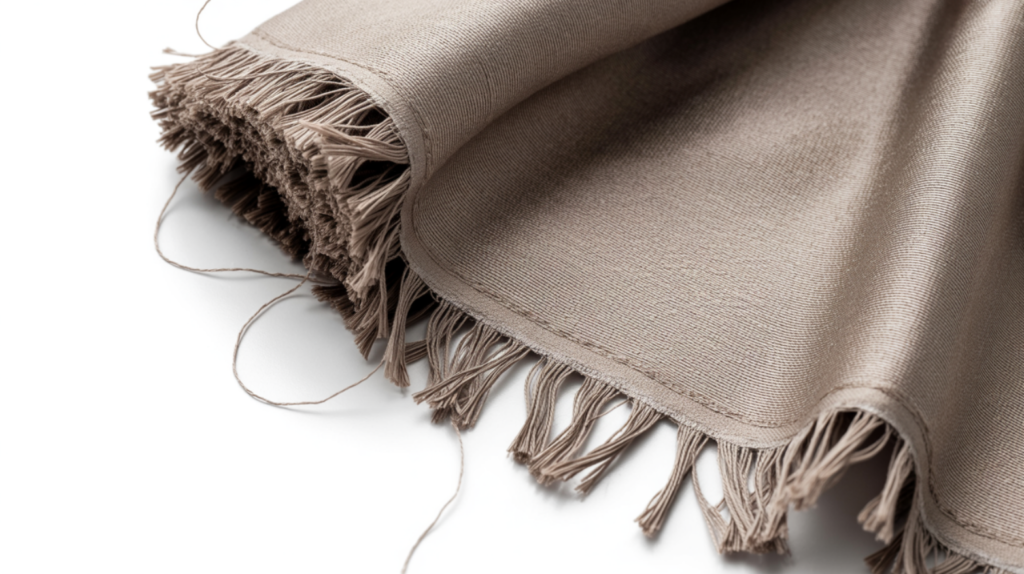
Unlike natural fibers, which slowly weaken through internal breakdown, synthetic fibers remain structurally strong for long periods. However, their very rigidity creates a different fraying problem, instead of fibers breaking, the weave itself begins to fail.
This distinction explains why synthetic fabrics often appear intact while their edges quietly unravel.
Why Synthetic Fabrics Fray Differently
Synthetic fibers such as polyester are smooth, rigid, and highly resistant to breakage.
When stress is applied, the fibers do not easily snap. Instead, they slide against one another. Over time, this sliding loosens the weave, especially along seams and edges where tension concentrates.
As the weave opens, individual threads migrate outward, forming frayed edges even though the fibers themselves remain strong. This behavior contrasts sharply with natural fabrics like cotton, where fibers actually break as seen in cotton fabric fraying problems.
Because synthetic fibers do not absorb moisture like plant fibers, the damage progresses more slowly, but once it begins, it becomes persistent and difficult to reverse.
Common Fraying Zones in Synthetic Fabrics
Polyester and other synthetics typically fray in areas exposed to repeated movement:
- Cuffs and hems
- Backpack straps and shoulder zones
- Seams under constant tension
- Upholstery contact points
Friction slowly overcomes the weave’s grip, especially where the fabric is bent or compressed repeatedly.
This pattern becomes especially noticeable when comparing synthetics with elastic fibers like wool, which redistribute stress internally, a contrast discussed in wool fabric fraying solutions.
How Synthetic Fraying Progresses Over Time
Once the weave loosens, fraying tends to accelerate.
As threads slip, fewer remain to carry the load, increasing tension on the remaining structure. Eventually, small frayed edges expand into long unraveling zones that compromise seams and hems.
This behavior fits cleanly into the overall framework of fabric fraying by material type, where fiber composition and weave interaction determine the lifespan of the textile.
Preventing Fraying in Synthetic Fabrics
Although synthetic fibers are strong, preventing weave movement is critical.
The most effective strategies include:
- Reducing friction from tight straps and heavy loads
- Washing inside-out to limit abrasion
- Avoiding excessive heat that can deform fibers
- Using gentle cycles to preserve weave alignment
- Reinforcing stress zones early with stitching or edge sealing
These measures stabilize the weave and dramatically extend fabric life.
Final Clarity
Synthetic fabric fraying is not caused by weak fibers.
It happens because strong, rigid fibers slide within the weave until the structure itself fails.
Strong fibers still require structural protection.