Fabric fraying often creates confusion.
When threads begin to unravel, many people wonder whether something has gone wrong with the fabric itself or whether the change is simply part of natural wear.
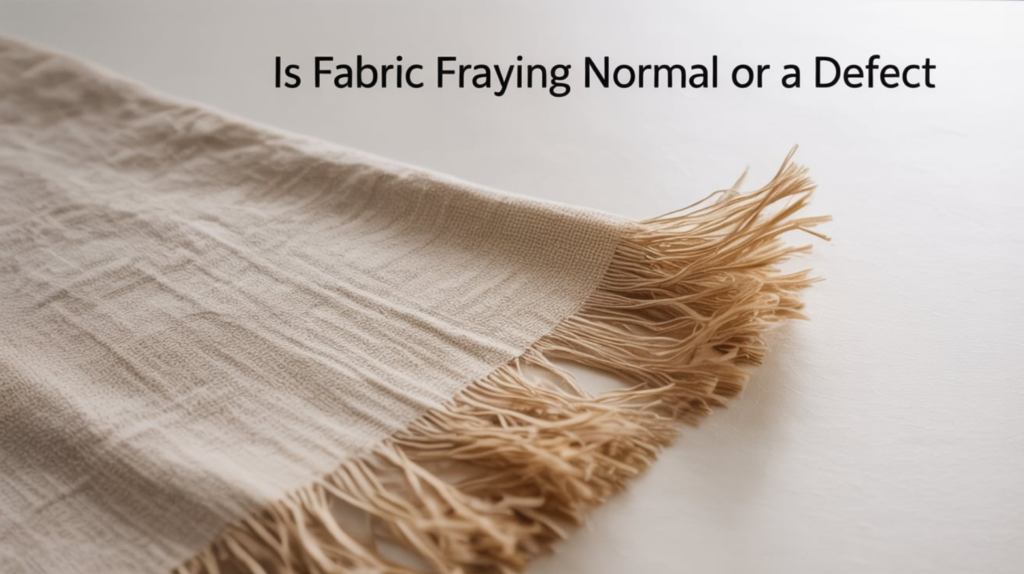
This article explains the difference, helping you understand when fraying is expected and when it signals a deeper problem.
Why Fraying Happens to Almost All Fabrics
Fabric fraying is a natural outcome of daily use.
Every movement, wash cycle, and moment of friction places stress on textile fibers.
Over time, that stress weakens the bonds holding the fabric together, allowing threads to loosen and escape.
This gradual breakdown is the same process described in why fabric frays over time, where accumulated mechanical strain slowly reshapes the structure of the cloth.
Because all fabrics experience stress, fraying itself is normal.
It is a sign that the textile has been used, lived in, and exposed to real life.
When Fraying Is Considered Normal Wear
Fraying is normal when it develops slowly in high-stress areas.
Hems that brush the floor.
Cuffs that rub against surfaces.
Collars that bend repeatedly.
Pocket openings that carry weight.
These areas experience the greatest strain, so it is expected that fraying appears there first.
The pattern of this wear becomes clearer when understanding what causes fabric edges to fray, where exposed fibers lose stability faster than protected sections.
In these cases, fraying reflects natural aging rather than a flaw.
When Fraying Indicates a Fabric Defect
Fraying may indicate a defect when it appears rapidly, spreads unusually fast, or occurs in low-stress areas.
If a brand-new garment begins unraveling after minimal use, the weave may have been weak, poorly finished, or improperly constructed.
Manufacturing issues such as loose weaves, low-quality fibers, and unfinished seams dramatically reduce a fabric’s ability to resist stress.
In these situations, fraying is not simply aging, it is premature failure.
Understanding what is fabric fraying helps distinguish between natural wear and abnormal breakdown.
Why This Distinction Matters
Recognizing whether fraying is normal or defective shapes your next decision.
Normal fraying can be slowed, reinforced, and managed.
Defective fraying often signals that the item will continue failing no matter how carefully it is handled.
There is peace of mind in knowing the difference, the calm confidence of understanding whether a garment deserves repair or replacement.
Closing Perspective
Fabric fraying is a natural process driven by repeated stress, but it becomes a defect when it appears too quickly or in the wrong places.
Learning to read these signals allows you to care for your textiles wisely, protect your investments, and extend the life of the things that quietly support your daily life.