
Stopping fabric from fraying without sewing means securing the raw edges of fabric so threads cannot escape the weave, without using needle or thread.
The goal is simple: lock the fibers in place before they begin unraveling.
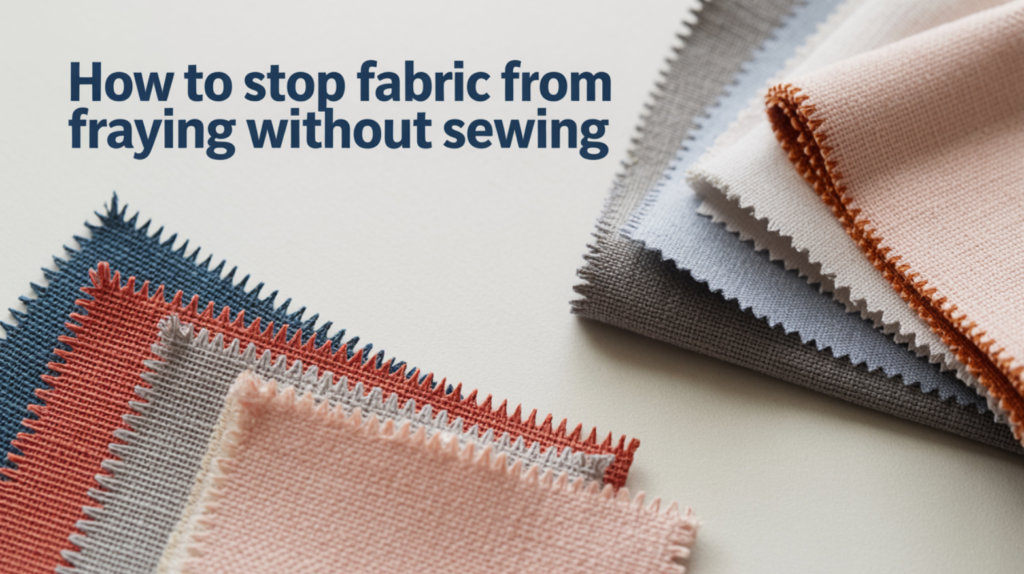
This method is especially helpful when repairing clothing on the go, finishing crafts, working with delicate fabrics, or handling projects where sewing tools are unavailable.
With the right techniques, fabric can remain clean, stable, and intact even without a single stitch.
Why Fabric Frays When Left Unprotected
Fabric frays because loose fibers migrate out of the weave under motion and friction.
When edges are cut or worn, the woven structure weakens.
As the weave loosens, individual threads slide free.
Once that process begins, the edge deteriorates quickly.
Some materials release fibers more easily.
For example, when working with blends and synthetics, polyester can fray differently than cotton because its filaments stretch and rebound under stress instead of breaking cleanly.
Understanding this behavior allows us to interrupt it, without sewing.
Mechanical Edge Control (Fastest No-Sew Method)
Mechanical control prevents fraying by physically trapping the fibers at the edge.
Effective Mechanical Techniques
Folding the Edge Inward
When the edge is folded and pressed, the raw fibers become hidden and compressed inside the fabric body.
This compression limits fiber movement and slows unraveling.
Iron-Activated Edge Pressing
Heat relaxes fibers and allows the fold to hold its shape longer.
As the fabric cools, the edge stiffens slightly, improving stability.
Temporary Fabric Tapes
Edge-binding tapes grip fibers from both sides, creating instant stabilization.
They are especially useful for hems, curtains, and costume work.
These techniques are quick, clean, and require no curing time.
Adhesive-Based No-Sew Solutions
Adhesives stabilize fabric by bonding fibers together at the edge.
Common Adhesive Options
Fabric Glue
Fabric glue penetrates the weave and hardens lightly, forming a flexible barrier.
As it dries, it locks fibers in place and prevents further unraveling.
Liquid Seam Sealants
Sealants create a thin coating along the edge.
This coating stiffens the boundary and prevents fibers from slipping free.
Clear Craft Adhesives
For lightweight fabrics, small amounts of clear adhesive can provide temporary stabilization without altering appearance.
If your project requires stronger long-term protection, these methods are expanded further in
How to Stop Fabric from Fraying with Glue.
Cutting Practices That Prevent Fraying (Without Sewing)
Many fraying problems start at the cutting stage.
Safer Cutting Methods
Use Sharp Tools
Sharp blades slice fibers cleanly instead of crushing them, preserving the weave.
Cut Along the Fabric Grain
Grain-aligned cuts maintain fiber tension and resist unraveling.
Apply Adhesive Before Cutting
Light adhesive brushed along the cut line stabilizes fibers before separation.
These habits dramatically reduce the chance of fraying even before edge treatments begin.
They are explored in more depth in
Cutting Fabric Without Causing Fraying.
Protecting Edges During Washing & Wear
Washing accelerates fraying through movement and friction.
Protective Habits
- Turn garments inside out
- Use mesh laundry bags
- Choose gentle wash cycles
- Avoid high heat drying
Each of these actions reduces stress on fabric edges and preserves the stabilizing work you’ve done.
More guidance appears in
Washing Techniques to Prevent Fabric Fraying.
When No-Sew Is the Right Choice
No-sew methods work best when:
- Repairs must be quick
- Fabrics are delicate
- Sewing tools are unavailable
- The project is temporary or decorative
For high-stress garments, stitching still provides maximum durability, which is covered in
Best Stitching Methods to Prevent Fraying.
Conclusion
Stopping fabric from fraying without sewing is both practical and reliable when the edge is properly stabilized.
By compressing fibers, bonding them with adhesives, and protecting them from mechanical stress, the fabric’s structure remains intact and its lifespan extends dramatically.
Fraying does not demand a needle.
It demands control of the fibers, and that control is entirely within your hands.