
Fabric fraying is the gradual breakdown of threads along a fabric’s edges caused by tension, movement, and wear.
When the woven structure loosens, individual fibers escape the weave and the edge begins to unravel.
This article explains exactly how fabric fraying happens and the most reliable ways to stop it before permanent damage occurs.
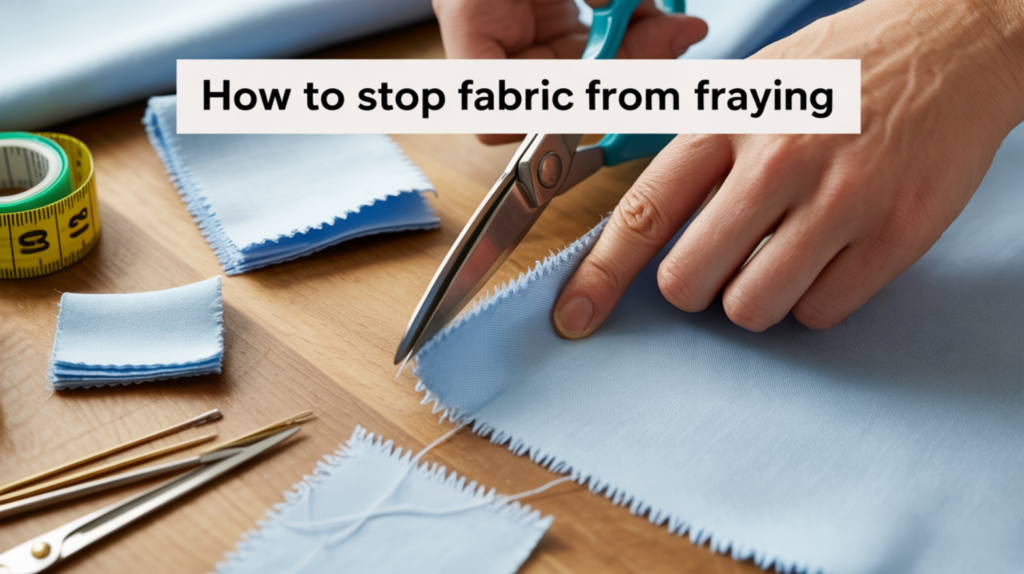
If you’ve ever watched a favorite shirt sleeve slowly fall apart or seen a new curtain start shedding threads after one wash, you already understand how quietly destructive fraying can feel.
The good news is that fraying is not random and not inevitable.
With the right methods, you can stabilize fabric edges, extend garment life, and preserve the look and structure of nearly any textile.
Why Fabric Frays in the First Place
Fabric fraying begins when mechanical stress disrupts the weave.
The fabric weave holds fibers together through interlacing tension.
When that tension is disturbed, the weave loosens and threads migrate outward.
This stress comes from:
- Cutting without stabilization
- Repeated washing agitation
- Friction from use
- Weak edge finishing during manufacturing
Over time, these forces compound.
As a result, even strong materials slowly surrender at the edges.
Some materials are naturally more vulnerable.
For example, when working with mixed fibers, polyester can fray differently than cotton because synthetic filaments behave under stress in unique ways.
Core Principles of Stopping Fraying
All fray-prevention methods operate on one core principle:
Stabilize the fabric’s edge so fibers cannot escape the weave.
This stabilization can be achieved through:
- Physical binding (stitching, folding, sealing)
- Chemical bonding (fabric glue, sealants)
- Controlled cutting techniques
- Protective washing habits
Each method reinforces the weave in a different way, but all aim toward the same outcome: edge integrity.
Primary Methods to Stop Fabric from Fraying
1. Mechanical Edge Control (No Sewing)
If sewing is not an option, mechanical control becomes the fastest defense.
You can stabilize fabric by:
- Folding raw edges inward and pressing firmly
- Applying temporary edge tape or adhesive strips
- Using edge-binding tapes that grip fibers together
These techniques physically restrict fiber movement.
As a result, thread migration slows dramatically.
For situations where needles and thread are unavailable, this approach is expanded in
How to Stop Fabric from Fraying Without Sewing.
2. Adhesive & Chemical Stabilization
Chemical stabilization works by bonding fibers together at the edge.
This includes:
- Fabric glue
- Liquid seam sealants
- Fray-preventing coatings
These compounds penetrate the fabric’s edge and harden slightly, locking fibers into position.
Once cured, they behave as a flexible barrier that resists unraveling.
If your project involves hems, patches, or craft work, this approach becomes especially valuable, as explained in
How to Stop Fabric from Fraying with Glue.
3. Stitch-Based Reinforcement
Stitching creates controlled tension zones that trap fibers inside the weave.
The most effective stitches include:
- Zigzag stitch
- Overlock stitch
- Blanket stitch
- French seam construction
Each stitch pattern creates a barrier that threads cannot easily cross.
This mechanical lock dramatically slows fiber release, even under heavy use.
If long-term durability matters, stitching remains the strongest line of defense.
You’ll find detailed comparisons in
Best Stitching Methods to Prevent Fraying.
4. Cutting Techniques That Prevent Fraying
Fraying often starts at the moment of cutting.
Clean cuts maintain fiber alignment.
Jagged cuts disturb the weave and accelerate unraveling.
The safest cutting practices include:
- Using rotary cutters instead of scissors
- Cutting along the grain of the fabric
- Applying temporary edge stabilizer before cutting
- Avoiding dull blades that crush fibers
Proper cutting reduces the stress introduced at the edge and significantly delays fraying, as explored in
Cutting Fabric Without Causing Fraying.
5. Washing & Handling Strategies
Washing introduces motion, friction, and moisture, all of which weaken fabric edges.
Preventative washing methods include:
- Turning garments inside out
- Using mesh laundry bags
- Selecting gentle wash cycles
- Avoiding high-heat drying
Each technique minimizes the mechanical assault that loosens fibers.
Over time, this preservation becomes one of the most powerful tools against fraying, explained further in
Washing Techniques to Prevent Fabric Fraying.
6. Commercial Fray Prevention Products
Commercial products are engineered specifically for edge stabilization.
These include:
- Liquid fray blockers
- Heat-activated seam tapes
- Fabric sealant sprays
- Edge-coating compounds
Their advantage lies in consistency and speed.
For quick repairs or high-stress areas, these solutions perform exceptionally well, detailed inside
Best Fabric Sealants & Fray Preventers.
Choosing the Right Method for Your Fabric
Different fabrics respond differently to stress.
For instance, tightly woven denim resists fraying better than loose linen, while synthetic blends respond more effectively to chemical sealants.
Understanding the fabric type helps you select the most efficient stabilization method.
When working with sensitive materials, even gentle handling can determine whether a garment lasts months or years.
Conclusion
Fabric fraying is the natural result of fiber movement under stress, but it is fully controllable.
When edges are properly stabilized, fibers remain locked inside the weave and the fabric retains its structure, appearance, and strength.
By combining cutting discipline, edge reinforcement, careful washing, and targeted sealing, you create a protective system that extends fabric life dramatically.
Fraying is not something you simply accept.
It is something you engineer against.
And once you understand how the fibers behave, every piece of fabric becomes easier to preserve.