Upholstery fabric lives a hard life.
It carries weight, absorbs motion, and withstands years of contact.
When it begins to fray, it is not simply wearing out, its structure is slowly failing.
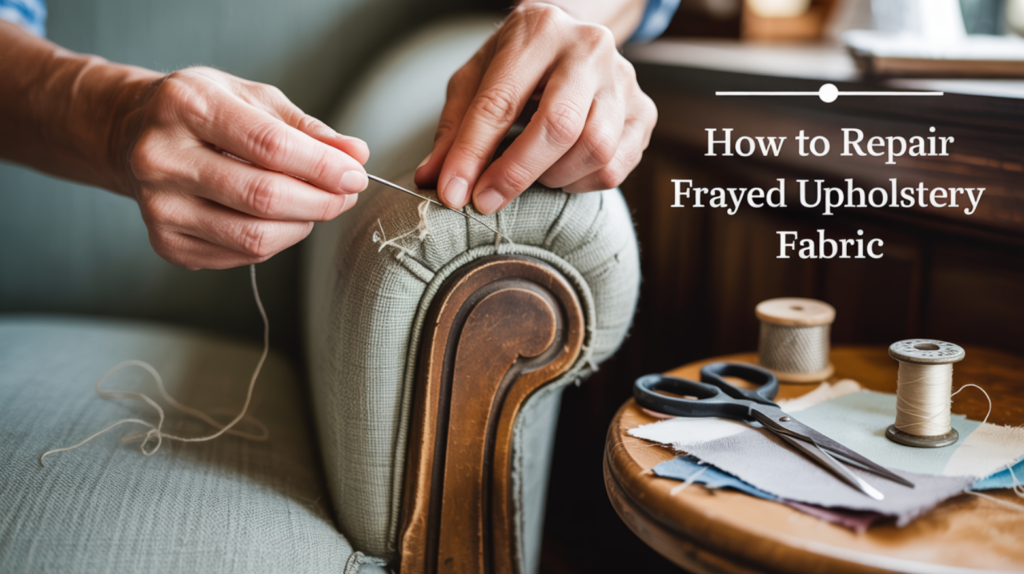
Repairing frayed upholstery fabric means stopping the fiber breakdown, reinforcing the stress zone, and restoring stability to the surface so the furniture remains both usable and safe.
Unlike clothing, upholstery damage spreads quickly because the fabric supports constant pressure.
Why Upholstery Frays Differently Than Clothing
Upholstery fibers endure continuous friction from sitting, shifting, and movement.
The weave stretches and compresses repeatedly, especially along:
- Seat edges
- Armrest seams
- Cushion corners
- Backrest junctions
As these fibers loosen, the material begins to shed threads.
The weakened area then expands as pressure continues, creating visible wear and hidden structural loss beneath the surface.
When edge damage first appears, it follows the same early breakdown pattern described in How to Fix Frayed Fabric Edges, but upholstery requires deeper reinforcement because of the load it carries.
A Practical Upholstery Repair Method
1. Clean and Isolate the Damage
Brush away debris and loose fibers.
Trim only threads that are already detached.
This prepares the surface for stabilization and prevents contaminants from weakening the repair bond.
2. Stabilize the Fray
Apply a flexible fabric adhesive or upholstery sealant beneath and around the damaged zone.
Press the fibers gently back into place.
This step locks the weave and stops further unraveling before reinforcement begins.
3. Reinforce the Stress Area
Use a curved upholstery needle to sew a supportive stitch beneath the surface.
This hidden reinforcement redistributes weight across stronger surrounding fibers.
For visible zones, a decorative patch or fabric overlay can provide both reinforcement and aesthetic balance.
If the furniture fabric shows multiple weak zones or the material has thinned across large areas, the decision between repair and replacement becomes critical, a balance discussed in When to Replace Frayed Fabric Instead of Repairing.
Temporary vs Structural Upholstery Fixes
Some upholstery repairs are designed for quick stabilization.
Others are intended to restore long-term function.
Understanding the difference prevents repeating the same repair cycle.
This distinction is explored further in Temporary vs Permanent Fabric Fraying Fixes, where the long-term durability of various approaches becomes clear.
The Quiet Reward of Saving Furniture
Furniture holds memory.
The couch where conversations happened.
The chair where evenings slowed down.
Saving upholstery preserves more than material, it protects the spaces that shape daily life.
What Upholstery Repair Truly Is
Repairing frayed upholstery fabric is the process of stabilizing weakened fibers and reinforcing high-stress zones to restore load-bearing strength and prevent further structural failure.
It preserves both the function of the furniture and the comfort it provides.
When performed correctly, upholstery repair extends furniture life by years.