
Frayed fabric edges are one of the earliest and most visible signs of material breakdown.
They occur when the outer threads of a textile loosen and separate, allowing the weave to unravel.
Fixing frayed edges means stopping the thread loss, stabilizing the boundary, and restoring strength to the fabric’s structure before the damage spreads.
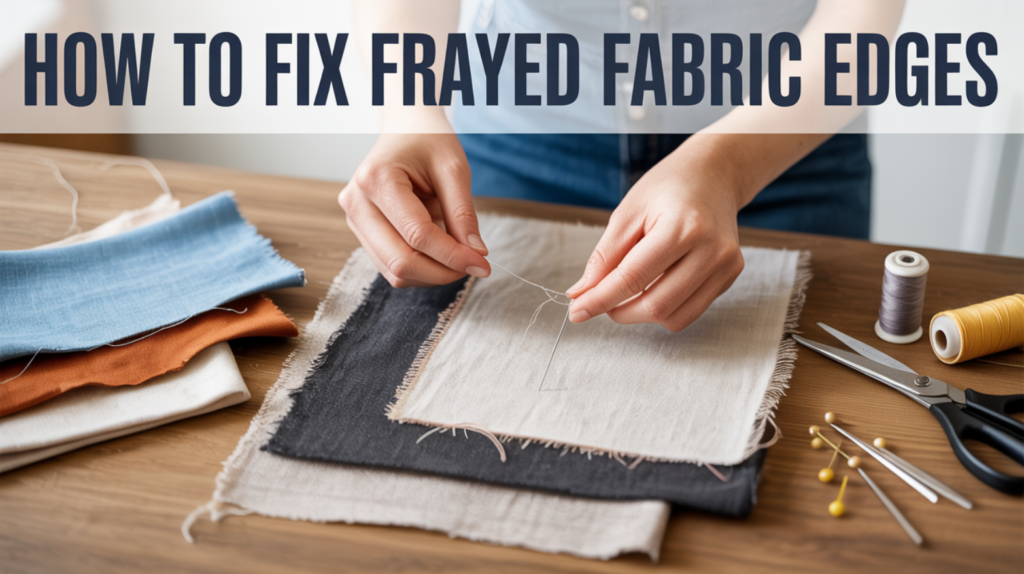
When left untreated, even a small edge fray can expand across seams, hems, and corners, especially in clothing, curtains, and upholstery.
Why Fabric Edges Fray First
Fabric edges carry the most stress.
They absorb pulling forces, washing friction, and repeated movement.
As the fibers weaken, the woven structure loses tension, and the outer threads begin to release.
This process accelerates in frequently washed garments and high-contact household textiles.
Materials with loose weaves, such as linen and cotton, are especially vulnerable because their fibers shift more easily under pressure.
As this happens, the damage does not stay localized. The fray moves inward, weakening nearby fibers and increasing the size of the compromised area.
Step-by-Step: How to Fix Frayed Fabric Edges
The most reliable repairs follow a simple structural sequence:
secure → reinforce → protect
1. Trim Loose Threads Carefully
Start by removing the loose, hanging fibers using sharp scissors.
This prevents further pulling and creates a clean working surface.
Avoid cutting into stable fabric. Only remove fibers that are already detached.
2. Apply a Stabilizing Barrier
At this stage, the goal is to stop unraveling.
A small amount of clear fabric sealant, fray check solution, or diluted fabric glue creates a flexible barrier that locks the weave in place.
This method works well on lightweight garments, hems, and decorative fabrics.
For thicker materials such as denim, additional reinforcement may be needed, which is explored further in Can You Repair Frayed Denim.
3. Reinforce the Edge
Once the fibers are secured, reinforcement restores strength.
This can be done with:
- A narrow hand stitch along the edge
- A zigzag stitch on a sewing machine
- A folded hem secured with stitching
These reinforcements distribute stress across the repaired area, preventing the edge from reopening under movement.
If the fraying appears across larger garment sections, the broader repair process is covered in Repairing Frayed Clothes at Home, where multiple stabilization techniques are combined for long-term durability.
When Temporary Fixes Are Enough
Not every repair needs to be permanent.
For costumes, short-term use, or emergency fixes, quick stabilization is often sufficient.
In these situations, temporary methods focus on holding fibers together long enough to preserve appearance and function.
The difference between short-term and long-term solutions becomes important as wear continues, which is explained clearly in Temporary vs Permanent Fabric Fraying Fixes.
Preventing Future Edge Fraying
After repair, prevention keeps the damage from returning.
- Wash delicate items in mesh laundry bags
- Avoid overloading washing machines
- Air-dry when possible to reduce mechanical stress
- Reinforce raw edges before the first wash on new garments
These small habits dramatically extend the life of repaired fabric.
What Fixing Frayed Edges Really Does
Fixing frayed fabric edges means locking weakened fibers in place and reinforcing the fabric boundary so unraveling cannot continue.
This controlled repair stabilizes the material and restores the edge’s ability to withstand movement and tension.
When done early, edge repair preserves both appearance and structural integrity for the long term.