Denim is known for strength, thickness, and long-term durability, yet even this rugged fabric eventually develops fraying problems.
At its foundation, denim is a tightly woven cotton fabric, and while that dense weave delays damage, the fibers themselves still respond to stress, moisture, and movement over time. Fraying in denim does not happen quickly, but when it does begin, it tends to progress in a very permanent way.
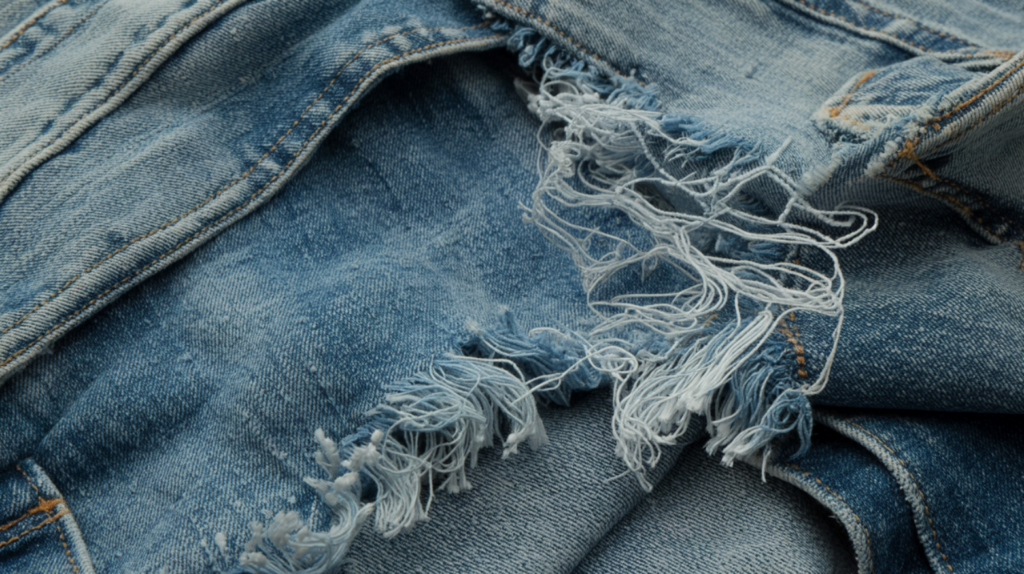
This slow, quiet breakdown is what makes denim fraying both predictable and difficult to reverse.
Why Denim Frays Differently Than Regular Cotton
Denim threads are thicker and packed more tightly than most cotton fabrics.
This construction locks fibers in place, which initially protects the fabric from surface damage. However, when friction finally overcomes that structure, the fibers that break cannot easily be replaced by neighboring threads. As a result, once fraying appears, it spreads in a sharp, jagged pattern rather than a soft, fuzzy one.
In contrast, lighter cotton fabrics loosen gradually, as explained in cotton fabric fraying problems, whereas denim tends to hold firm and then fail suddenly under concentrated stress.
The Most Common Denim Fraying Zones
Denim fraying almost always begins in high-tension areas:
- Hem edges rubbing against shoes
- Pocket openings exposed to constant pulling
- Knee zones flexing thousands of times per day
- Thigh areas affected by body movement and friction
Every step, bend, and stretch applies force to the weave. Over months of wear, those forces accumulate until the tightly locked fibers finally begin to separate.
Sun exposure and repeated washing accelerate this process. Water swells the cotton fibers, while heat and detergents weaken their internal bonds. Once weakened, even denim’s dense structure can no longer prevent fraying from forming.
How Denim Fraying Shortens Garment Life
When denim begins fraying, the damage rarely stays cosmetic.
The exposed fibers invite further breakage, pulling neighboring threads loose and concentrating stress along the edges of the weave. Small frayed zones often become full tears because the surrounding structure no longer distributes tension evenly.
This is why many people notice that their jeans appear stable for years, then suddenly fail within a short period. The breakdown has been developing quietly all along.
Understanding this pattern fits into the larger picture of fabric fraying by material type, where each textile follows its own aging curve based on fiber behavior and construction.
How Denim Fraying Compares With Other Fabrics
Although denim is cotton-based, its fraying behavior differs greatly from delicate fabrics like silk. Where denim resists damage until stress overwhelms it, silk fibers weaken rapidly under even mild friction, a contrast explored in silk fabric fraying causes & prevention.
This comparison highlights why denim survives long periods of wear yet ultimately fails when its internal structure reaches its limit.
Conclusion
Denim fraying is the natural result of thick cotton fibers slowly losing their grip under repeated movement, moisture, and mechanical stress.
Its dense weave delays the damage, but once the fibers weaken, the fabric can no longer protect itself.
Denim does not fray easily, but when it does, the process is decisive.