Fraying often begins long before the fabric is worn.
It starts at the moment the scissors touch the cloth.
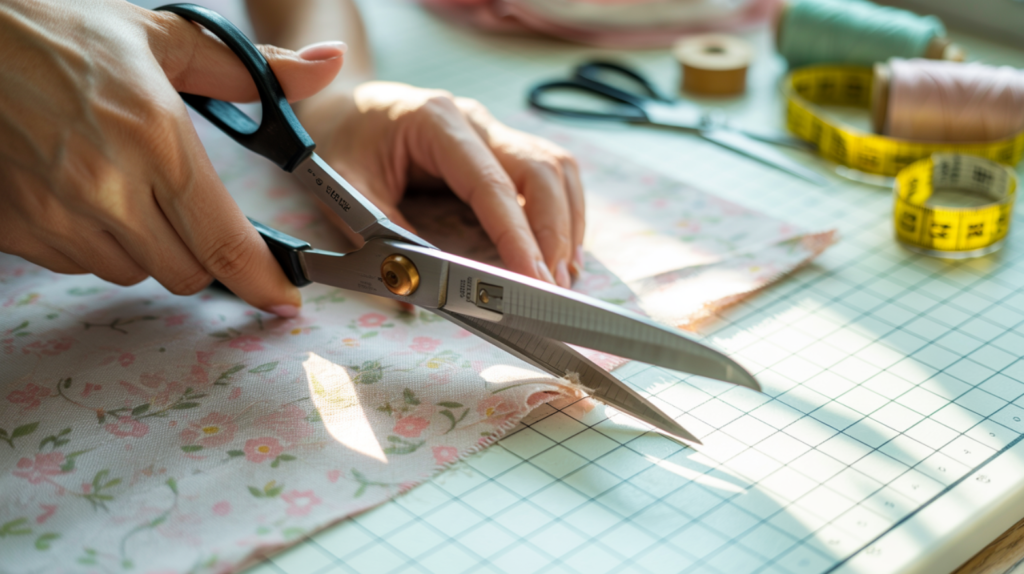
The way fabric is cut determines how its fibers behave from that point forward.
A clean, controlled cut preserves the weave.
A careless cut weakens it and invites unraveling.
Learning how to cut fabric properly is one of the most powerful, and most overlooked, ways to stop fraying before it ever starts.
The Edge Is Where Everything Happens
Fabric is a community of interlocked fibers.
When those fibers are sliced cleanly, they stay loyal to the weave.
When they are crushed, torn, or pulled apart, they begin drifting away.
This drifting is what we later call fraying.
Some fabrics forgive mistakes.
Others do not.
In blended materials where polyester can fray differently from cotton or linen, the wrong cut can trigger rapid edge breakdown that no amount of later repair can fully reverse.
Choose Tools That Respect the Fabric
A blade should part fibers, not bruise them.
Sharp scissors or rotary cutters produce smooth edges with minimal disturbance.
Dull blades compress fibers, break filaments, and create micro-damage that grows with time.
Cutting on a firm, flat surface also matters.
A stable base allows the blade to move precisely, preserving the structure of the weave.
Follow the Grain, Not the Guess
Fabric has direction.
The grain is the pathway along which fibers naturally align and support one another.
Cutting with the grain keeps tension balanced across the edge.
Cutting against it weakens the weave and creates stress points that unravel faster under motion.
When fabric is aligned before cutting, its future becomes much more stable.
Stabilize Before You Separate
Sometimes the smartest move is to secure the fabric before the cut is made.
Light adhesive brushed along the cutting line, or gentle pressing with heat, binds fibers slightly.
When the blade follows, the edge stays cohesive instead of scattering.
This same idea appears in glue-based protection methods, explained further in
How to Stop Fabric from Fraying with Glue.
Shape Matters
Straight edges behave better than jagged ones.
Curves and notches introduce tension points where fibers pull apart more easily.
When shapes are required, stabilizing the edge immediately after cutting prevents that tension from turning into unraveling.
For projects that avoid sewing altogether, mechanical reinforcement techniques help maintain those edges, as shown in
How to Stop Fabric from Fraying Without Sewing.
Conclusion
Fabric does not decide to fray on its own.
It responds to how it is treated at its most vulnerable moment: the cut.
When fibers are sliced cleanly, aligned with the grain, and stabilized at the edge, the fabric keeps its integrity.
The weave remains loyal.
And fraying never gets the chance to begin.