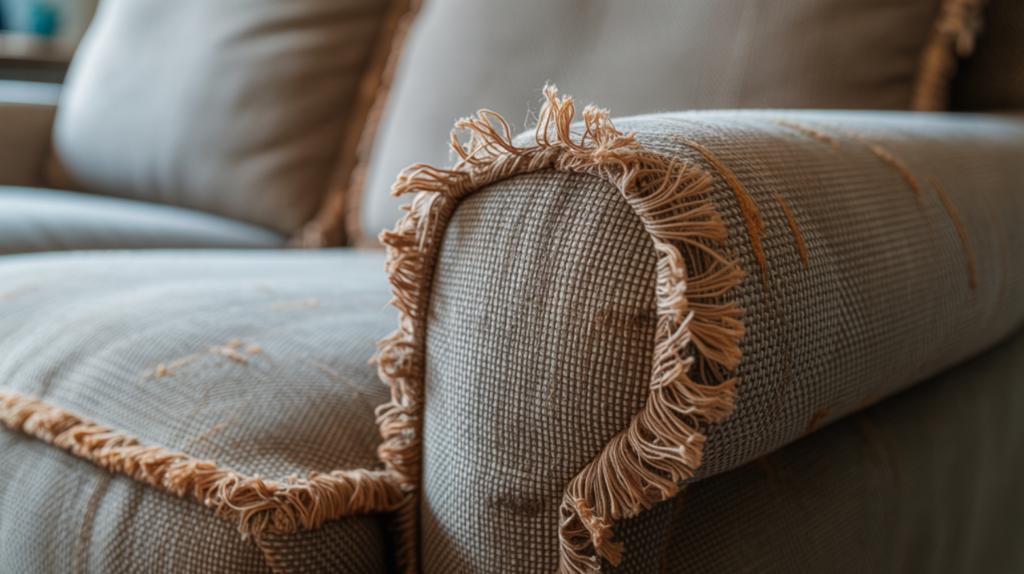
Couch and upholstery fabric fraying is the gradual breakdown of surface fibers and seams caused by constant contact, pressure, and repeated movement on furniture.
Unlike clothing, upholstery remains stationary, but it absorbs continuous stress from sitting, shifting weight, and friction against skin, clothing, and surrounding objects.
With time, these forces loosen the weave, allowing threads to escape and edges to unravel.
On FabricFraying.help, upholstery fraying represents one of the most financially important use cases because damaged furniture fabric often leads to expensive repair or full replacement.
Why Upholstery Fabrics Fray Differently Than Clothing
Upholstery experiences a different stress pattern than wearable textiles.
Instead of full-body movement, it absorbs concentrated pressure in specific zones such as seat cushions, armrests, and front edges.
As people sit, stand, and slide across the surface, fibers compress and stretch repeatedly.
In addition, environmental exposure plays a role.
Sunlight slowly weakens fibers through ultraviolet radiation, while indoor dust and grit act like microscopic sandpaper, increasing abrasion at contact points.
Together, these forces reshape the weave structure and reduce its ability to hold threads securely.
Common Fraying Zones on Couches and Furniture
Fraying does not occur evenly across furniture surfaces.
Front seat edges fray because they carry the most weight during entry and exit.
Armrests fray because hands and elbows apply friction in the same small area.
Cushion seams fray because the fabric bends constantly as cushions compress and rebound.
These high-stress zones reveal the underlying mechanics of upholstery wear: repeated tension weakens the weave, loose threads appear, and surface damage expands outward.
How Upholstery Fabric Type Influences Fraying
Material selection determines how quickly visible damage develops.
Natural fibers feel soft and breathable, but they absorb moisture and respond strongly to pressure changes.
Synthetic fibers behave differently; in many furniture applications, polyester can fray more slowly under compression yet becomes vulnerable when heat and abrasion combine.
Likewise, tightly woven fabrics resist unraveling longer than loose weaves, even under heavy use.
Understanding this interaction between structure and environment helps explain why two identical-looking couches can age very differently.
Early Warning Signs of Upholstery Fraying
Upholstery sends early signals before damage becomes severe.
You may notice fine fuzz collecting on seat edges.
You may feel rough patches where fabric once felt smooth.
You may see threads lifting from seams along cushions or armrests.
These changes indicate that the weave is loosening and that intervention can still slow the damage.
Practical Ways to Slow Upholstery Fraying
Protection begins with managing stress.
Rotating cushions redistributes pressure across the surface.
Vacuuming removes abrasive dust particles that accelerate wear.
Placing throws or arm covers shields high-contact zones from constant friction.
Keeping furniture out of direct sunlight reduces ultraviolet fiber breakdown.
Choosing furniture with reinforced seams and high thread density also increases resistance to long-term fraying.
How Upholstery Fraying Fits the Larger Fabric System
Upholstery fraying follows the same structural principles explained in fabric fraying by use case, even though the environment differs from clothing or bedding.
In each situation, stress reshapes the weave until fibers escape.
Recognizing this shared pattern allows prevention strategies to transfer across household textiles.
Conclusion – The Core Reality of Upholstery Fraying
Couch and upholstery fraying is the predictable result of pressure, friction, and environmental exposure acting on fabric over time.
Once the weave weakens in high-stress zones, unraveling becomes inevitable unless the structure is protected and reinforced.
This is not accidental damage, it is the natural life cycle of heavily used fabric.
Understanding it gives you the power to extend the life of your furniture significantly.