
Cotton is one of the most widely used fabrics in the world, yet it is also one of the most misunderstood when it comes to fraying.
At its core, cotton is a natural fiber spun into threads that are woven together to create breathable, comfortable fabric. Over time, however, those same fibers loosen, shift, and break apart under everyday stress, making cotton especially vulnerable to fraying.
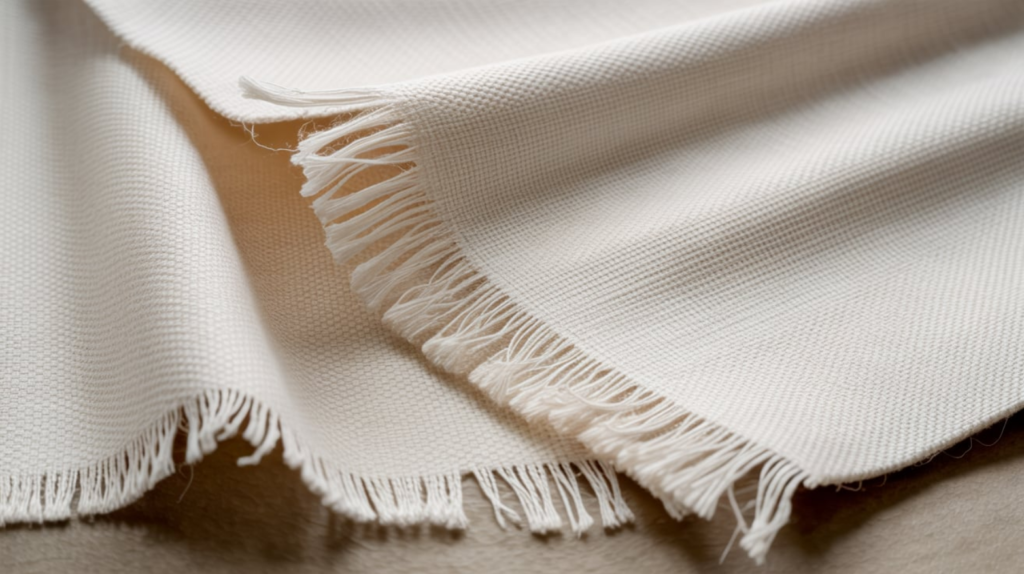
This is why cotton garments often look soft and worn long before they actually fail, the damage begins at the fiber level, long before it becomes visible.
Why Cotton Frays So Easily Over Time
Cotton fibers absorb moisture, swell, and then relax again as they dry.
This constant expansion and contraction weakens the grip between threads, allowing them to migrate toward the edges of the fabric. As the weave loosens, individual fibers start escaping, and fraying slowly forms.
Compared with more rigid fabrics like denim, which lock threads tightly into place, cotton’s flexibility gives it comfort but also leaves it exposed. The more often cotton is washed, folded, and rubbed, the faster this breakdown occurs.
Understanding this basic mechanism helps explain why cotton fraying feels inevitable after enough wear, even with careful handling.
The Most Common Cotton Fraying Situations
Cotton tends to fray first in areas that experience repeated movement or friction.
This includes shirt cuffs, collar edges, pocket corners, pant hems, and seam lines. Each motion applies tiny forces to the weave. Over time, those forces compound until the threads begin separating.
Environmental exposure accelerates this process. Sunlight weakens cotton fibers, heat dries them out, and detergents strip away natural oils that normally help fibers glide against each other. Once the fibers lose that flexibility, breakage becomes more likely.
Interestingly, many of these behaviors appear in other natural fibers as well. For example, when comparing cotton with plant-based textiles, the breakdown pattern closely resembles what happens in linen, a relationship explored more deeply in linen fabric fraying explained.
How Cotton Fraying Affects the Life of Clothing
As cotton frays, the fabric slowly loses structural integrity.
The weave becomes looser, seams weaken, and stress concentrates along the edges. Even before holes appear, the material is already compromised.
This explains why a cotton shirt may still look wearable while its edges quietly deteriorate. Eventually, a small frayed section becomes a tear, and the garment’s useful life ends far sooner than expected.
Recognizing early signs of cotton fraying allows intervention before the damage becomes permanent, which is one of the main goals behind understanding fabric fraying by material type.
How Cotton Fraying Compares With Other Fabrics
Cotton’s softness gives it comfort but sacrifices durability.
When contrasted with synthetic fabrics, the difference becomes even clearer. While cotton fibers break as they age, synthetic fibers often remain intact but shift within the weave. This is why, in certain conditions, polyester can fray in a very different visual pattern, even though the underlying cause is still fiber movement.
These contrasts help clarify why fabric choice plays such a powerful role in how long clothing lasts.
Conclusion
Cotton fraying is not a manufacturing flaw or poor fabric quality.
It is the natural outcome of how cotton fibers behave when exposed to moisture, motion, heat, and time.
Once this behavior is understood, the problem becomes predictable, and far easier to manage.