
Carpet fabric fraying is the gradual loosening and separation of fibers along edges, seams, and high-traffic zones caused by repeated foot pressure, friction, and embedded debris.
Unlike clothing or upholstery, carpet fibers remain under constant load from walking, furniture weight, and environmental contamination.
Over time, these forces weaken the binding that holds the fibers in place, allowing strands to escape and the surface to unravel.
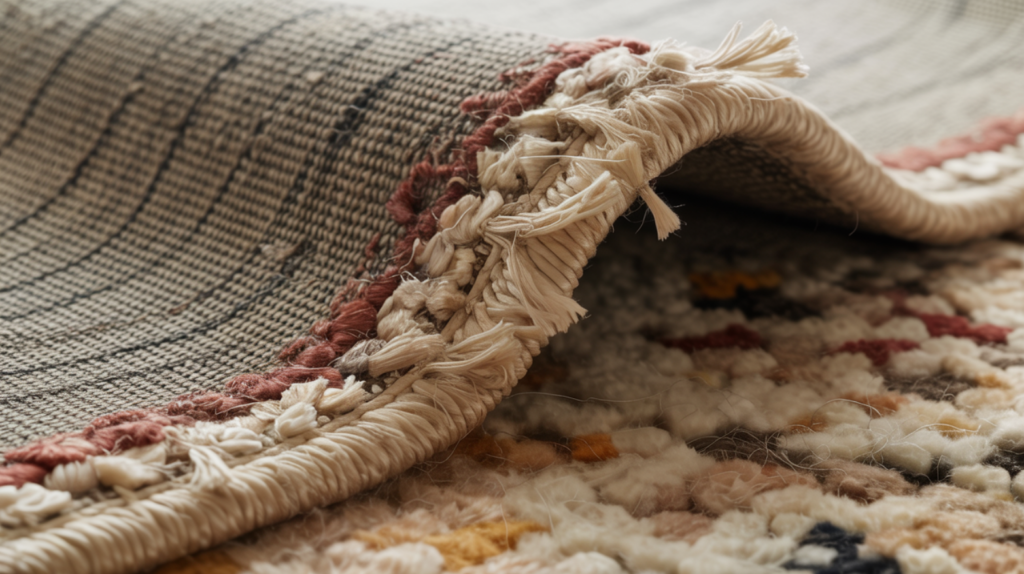
On FabricFraying.help, carpet fraying represents one of the most structurally demanding fabric environments because the textile never rests from mechanical stress.
Why Carpets Fray Faster Than Most Fabrics
Carpet fibers endure compression and shear with every step.
As feet apply downward force, the fibers bend and flatten, then spring back as weight shifts.
This repeated motion slowly deforms the weave structure.
At the same time, fine grit from shoes and dust settles between fibers.
Those particles create constant micro-abrasion that scours the surface and loosens the yarn.
As a result, even well-made carpets begin to release threads once the internal tension of the weave declines.
Common Locations Where Carpet Fraying Appears
Fraying follows traffic patterns.
Doorway edges fray first because they receive the highest movement.
Stair edges fray because foot placement concentrates pressure in the same narrow zone.
Seam lines fray because the carpet flexes along those joins.
Under furniture, hidden compression weakens fiber structure, causing delayed surface breakdown once weight is removed.
Each location reveals the same mechanism: stress reshapes the weave until fibers lose cohesion.
How Carpet Fiber Type Influences Fraying
Material choice strongly affects durability.
Wool carpets offer softness and insulation, but their natural fibers respond sensitively to moisture and compression.
Synthetic carpets behave differently; in heavy-use areas, polyester can fray more slowly at first yet becomes vulnerable when abrasive particles accumulate inside the pile.
The density of the weave also matters.
Tightly packed fibers distribute pressure more evenly and resist unraveling longer than loose, low-density constructions.
Early Warning Signs of Carpet Fraying
Before visible damage becomes severe, subtle changes appear.
You may see fine strands emerging along edges.
You may notice fuzz collecting near seams.
You may feel uneven texture underfoot where fibers have begun to loosen.
These early indicators signal that internal binding is weakening.
Practical Ways to Slow Carpet Fraying
Protection focuses on reducing stress and abrasion.
Regular vacuuming removes grit that accelerates wear.
Using entrance mats limits debris entering the carpet.
Rotating furniture redistributes compression zones.
Edge binding and professional seam sealing reinforce vulnerable borders.
Keeping moisture levels stable also helps preserve fiber structure over time.
How Carpet Fraying Fits the Larger Fabric System
Although carpet operates under heavier load than clothing or upholstery, it follows the same fabric behavior patterns described in fabric fraying by use case.
In every scenario, repeated stress weakens the weave until fibers escape.
Understanding this shared principle allows prevention methods to apply across all fabric environments.
Conclusion – The Core Reality of Carpet Fraying
Carpet fabric fraying is the natural outcome of constant pressure, abrasion, and contamination acting on textile structure.
Once the internal weave loses its grip on the fibers, unraveling progresses steadily unless the surface is protected and reinforced.
This process is not sudden failure, it is gradual mechanical fatigue.
Recognizing it early allows you to preserve both the appearance and function of your flooring.