Stitching prevents fabric fraying by creating controlled tension zones that physically trap fibers inside the fabric’s weave, stopping threads from escaping and unraveling.
When done correctly, stitching becomes a permanent barrier that protects fabric edges through years of wear, washing, and movement.
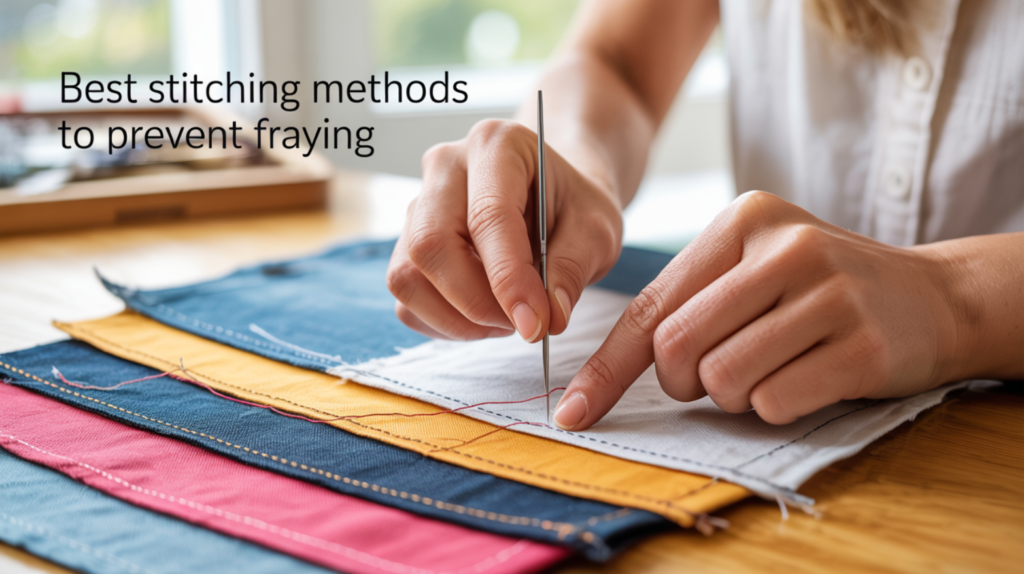
This method remains the most reliable solution for garments, upholstery, and any project where long-term durability matters.
Why Stitching Stops Fraying at the Structural Level
Fabric frays when fibers slide out of the weave under repeated stress.
Stitching interrupts this movement by compressing and anchoring the fabric layers together.
The thread forms a fence that loose fibers cannot cross.
Unlike adhesives, which bond fibers chemically, stitching restrains them mechanically.
As a result, the edge remains stable even under heavy tension.
Some fabrics benefit especially from stitch reinforcement.
In dense materials like denim or blends where polyester can fray unpredictably under friction, stitching provides the most consistent protection.
The Most Effective Stitch Types for Fray Prevention
Zigzag Stitch
The zigzag stitch creates a wide barrier across the raw edge.
Its flexible pattern moves with the fabric while holding fibers firmly in place.
Best for:
- Stretch fabrics
- Lightweight clothing
- General edge stabilization
Overlock Stitch (Serger Stitch)
The overlock stitch wraps around the fabric edge, enclosing it completely.
This method offers the highest level of fray resistance.
Best for:
- Professional garment construction
- High-stress seams
- Frequent-wash clothing
French Seam
The French seam traps raw edges inside a folded seam.
This method hides fibers entirely and prevents fraying from both sides.
Best for:
- Sheer fabrics
- Delicate garments
- Luxury finishing
Blanket Stitch
The blanket stitch creates spaced anchor points along the edge.
Each loop locks fibers in place while allowing decorative appeal.
Best for:
- Wool
- Felt
- Craft and home décor projects
How to Choose the Right Stitch
Your choice depends on fabric type, stress level, and project purpose.
If your project is decorative or temporary, no-sew methods may suffice, as discussed in
How to Stop Fabric from Fraying Without Sewing.
If the edge will endure washing, stretching, or load-bearing tension, stitching becomes essential.
For additional reinforcement, some projects combine stitching with adhesives as outlined in
How to Stop Fabric from Fraying with Glue.
Preparing the Fabric Before Stitching
Stitching performs best when the fabric edge is properly prepared.
This includes:
- Clean cutting with sharp tools
- Aligning fabric along the grain
- Stabilizing very loose weaves before stitching
Cutting discipline alone reduces fraying risk significantly, explained further in
Cutting Fabric Without Causing Fraying.
Conclusion
Stitching prevents fabric fraying by forming a permanent mechanical barrier that holds fibers inside the weave.
When tension is controlled and edges are sealed with the correct stitch, fraying becomes a solved problem rather than an ongoing threat.
A well-stitched edge protects your fabric, your work, and your time.