
Bedding and sheets fray when repeated body movement, laundering cycles, and surface friction gradually weaken the fibers across seams, edges, and contact zones.
While these fabrics appear soft and restful, they endure constant mechanical stress every night and frequent exposure to water, detergent, and heat.
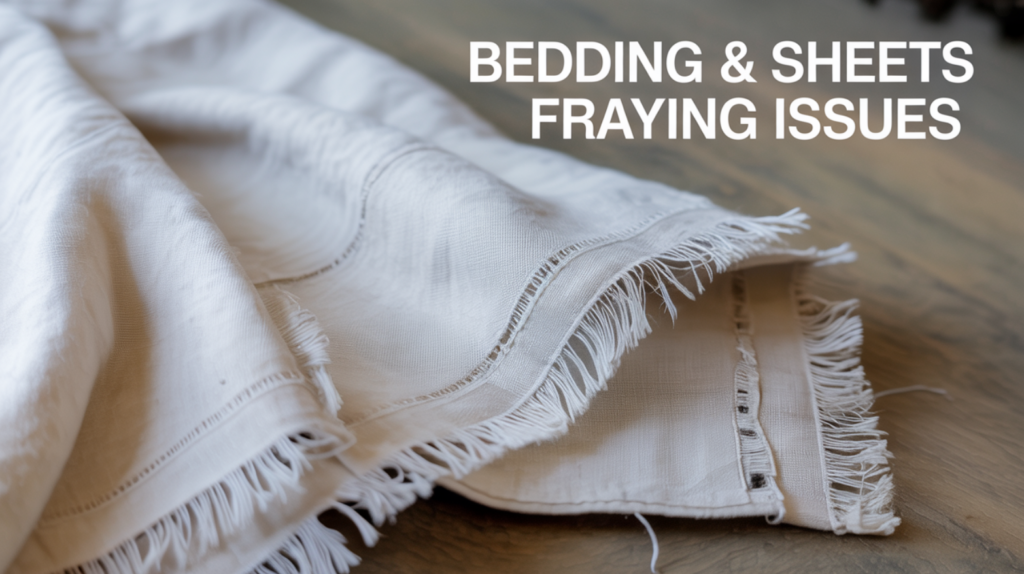
On FabricFraying.help, bedding fraying represents one of the most intimate and overlooked use cases because the damage develops quietly while the fabric remains in daily use.
Why Bedding Frays Faster Than It Appears
During sleep, the body shifts repeatedly.
Each movement applies tension and shear across the sheet surface and along its edges.
This nightly motion compresses fibers and slowly deforms the weave structure.
Washing intensifies the process.
Water causes fibers to swell, detergents remove natural oils that protect the threads, and drying heat accelerates fiber fatigue.
As a result, even high-quality sheets begin to release threads once internal cohesion declines.
Common Locations Where Bedding Fraying Appears
Damage follows patterns of contact and tension.
Pillowcase openings fray because heads and hands apply constant friction.
Sheet edges fray because they are pulled tight across mattress corners.
Fitted sheet seams fray because elastic tension stresses the fabric during stretching and release.
Each location demonstrates the same mechanism: stress weakens the weave, and fibers begin to migrate outward.
How Sheet Material Influences Fraying
Fabric composition determines how quickly deterioration becomes visible.
Natural fibers feel breathable and comfortable, but they absorb moisture and respond strongly to washing conditions.
Synthetic fibers behave differently; in many bedding products, polyester can fray more slowly from moisture but becomes vulnerable when heat and surface abrasion combine.
Weave density also matters.
High-thread-count fabrics distribute stress more evenly and resist unraveling longer than loose constructions.
Early Warning Signs of Bedding Fraying
Before holes appear, subtle changes emerge.
You may notice fine fuzz forming along sheet edges.
You may feel roughness where the fabric once felt smooth.
You may see threads lifting at pillow seams or fitted corners.
These signs indicate weakening internal structure.
Practical Ways to Slow Bedding Fraying
Prevention focuses on gentle care and stress reduction.
Washing in cool water limits fiber swelling.
Using mild detergent preserves protective coatings.
Avoiding excessive dryer heat prevents thermal damage.
Rotating sheet sets reduces cumulative stress on any single fabric.
Choosing sheets with reinforced hems and tightly woven construction further improves durability.
How Bedding Fraying Fits the Larger Fabric System
Bedding follows the same fundamental patterns explained in fabric fraying by use case.
Although the environment differs from carpets or curtains, the internal mechanics remain identical: stress reshapes the weave until fibers escape.
Understanding this consistency makes prevention more effective across the home.
Conclusion – The Core Reality of Bedding Fraying
Bedding and sheet fraying is the natural result of nightly motion and repeated laundering acting on fabric structure.
Once the weave loosens under constant stress, unraveling becomes unavoidable unless the fabric is carefully maintained.
This is not simple wear, it is mechanical fatigue of fibers over time.
Recognizing this allows you to protect comfort and extend the life of your bedding significantly.